
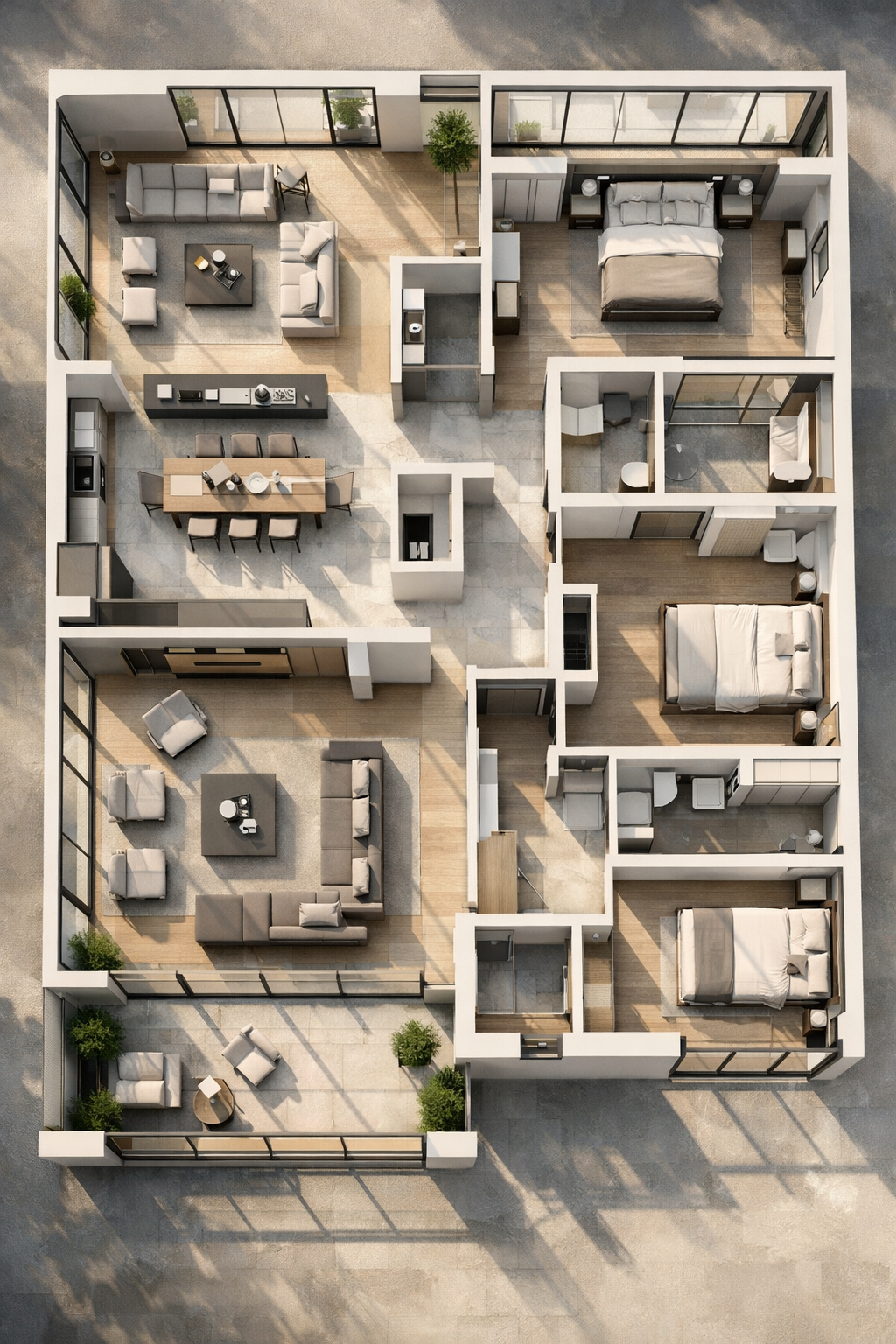
The success of any residential project begins with builder floor layout planning, long before construction starts on site. From a builder’s perspective, layout design is the most critical stage because it determines how comfortably families will live inside the home for years to come. While buyers often notice finishes and interiors after completion, builders spend months refining layouts to ensure natural movement, proper lighting, ventilation, and functional space utilization.
In South Delhi’s redevelopment environment, effective builder floor layout planning transforms limited urban plots into well-balanced living spaces that feel open, practical, and future-ready.
Why Builder Floor Layout Planning Is the Foundation of Good Design
Before structural work begins, builders analyze how every square foot will function. Builder floor layout planning focuses on creating harmony between architecture and daily living.
During this phase, developers consider:
-
movement between rooms
-
furniture placement possibilities
-
natural light distribution
-
privacy between spaces
-
efficient use of available area
A well-planned layout reduces wasted corridors and ensures homes feel spacious even without increasing size.
Understanding Movement Flow in Builder Floor Layout Planning
One of the most important elements of builder floor layout planning is circulation flow — how residents move naturally through the home.
Builders evaluate:
-
entry positioning
-
living-to-dining transitions
-
bedroom privacy zones
-
kitchen accessibility
Poor circulation creates discomfort even in large homes, while thoughtful planning improves usability instantly.
Natural Light Integration During Builder Floor Layout Planning
Natural lighting decisions are finalized during builder floor layout planning rather than during finishing stages.
Builders study sunlight direction to:
-
place living areas strategically
-
avoid dark interior zones
-
enhance openness perception
-
reduce energy consumption
Proper light placement significantly improves everyday living experience.
Ventilation Strategy in Builder Floor Layout Planning
Ventilation plays a major role in long-term comfort. During builder floor layout planning, developers design openings that allow air movement across spaces.
Key considerations include:
-
cross ventilation paths
-
balcony positioning
-
window alignment
-
airflow continuity
Well-ventilated homes remain comfortable across seasons and improve indoor air quality.
Balancing Privacy and Openness
Modern homes must feel open without sacrificing privacy. Builder floor layout planning carefully separates public and private zones.
Builders typically design:
-
welcoming common areas near entry
-
bedrooms positioned away from noise
-
controlled visual access between spaces
This balance enhances both comfort and functionality.
Structural Planning and Layout Coordination
Layout decisions must align with structural engineering. Builder floor layout planning ensures column placement supports design flexibility without disrupting room usability.
Builders coordinate:
-
column grid alignment
-
beam positioning
-
load distribution
-
ceiling height planning
Early coordination prevents structural limitations later.
Parking and Utility Integration in Layout Planning
Many buyers overlook that parking efficiency begins during builder floor layout planning.
Builders analyze:
-
vehicle turning radius
-
entry slope design
-
service areas placement
-
storage optimization
Proper planning avoids daily usability challenges after possession.
Why Builders Revise Layouts Multiple Times
Layout planning is rarely finalized in one attempt. Builders refine designs repeatedly to improve proportions and usability.
Revisions often focus on:
-
improving room dimensions
-
enhancing light penetration
-
reducing dead space
-
improving circulation comfort
These refinements ensure homes feel intuitive rather than forced.
Long-Term Thinking Behind Builder Floor Layout Planning
Experienced developers design homes not only for current trends but also for future living patterns. Builder floor layout planning anticipates evolving lifestyle needs such as work-from-home spaces and flexible layouts.
Homes designed with long-term adaptability maintain stronger resale value.
Conclusion
Effective builder floor layout planning is the invisible foundation behind comfortable homes. While construction may appear faster, the real effort lies in designing spaces that balance movement, light, ventilation, and privacy. In South Delhi’s competitive housing market, thoughtful layout planning ensures builder floors deliver lasting comfort and functional elegance long after completion.