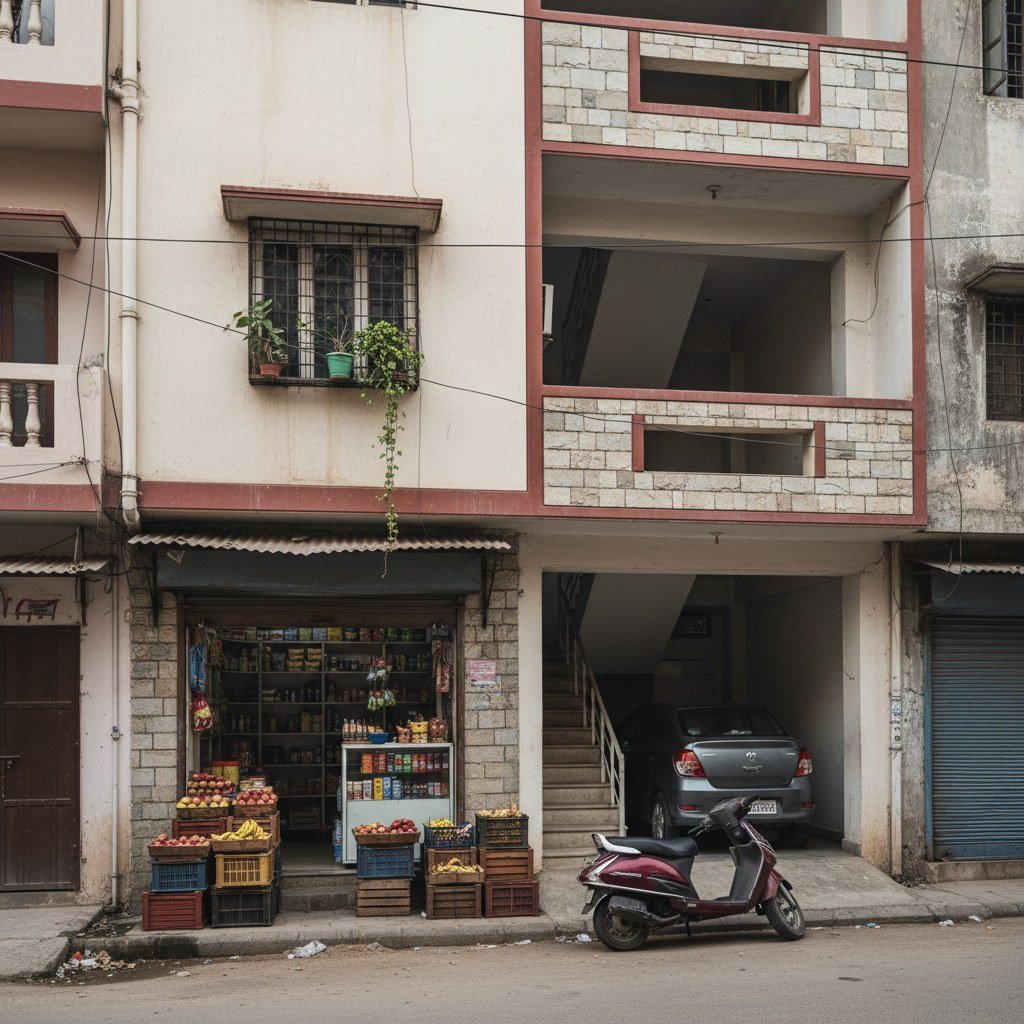
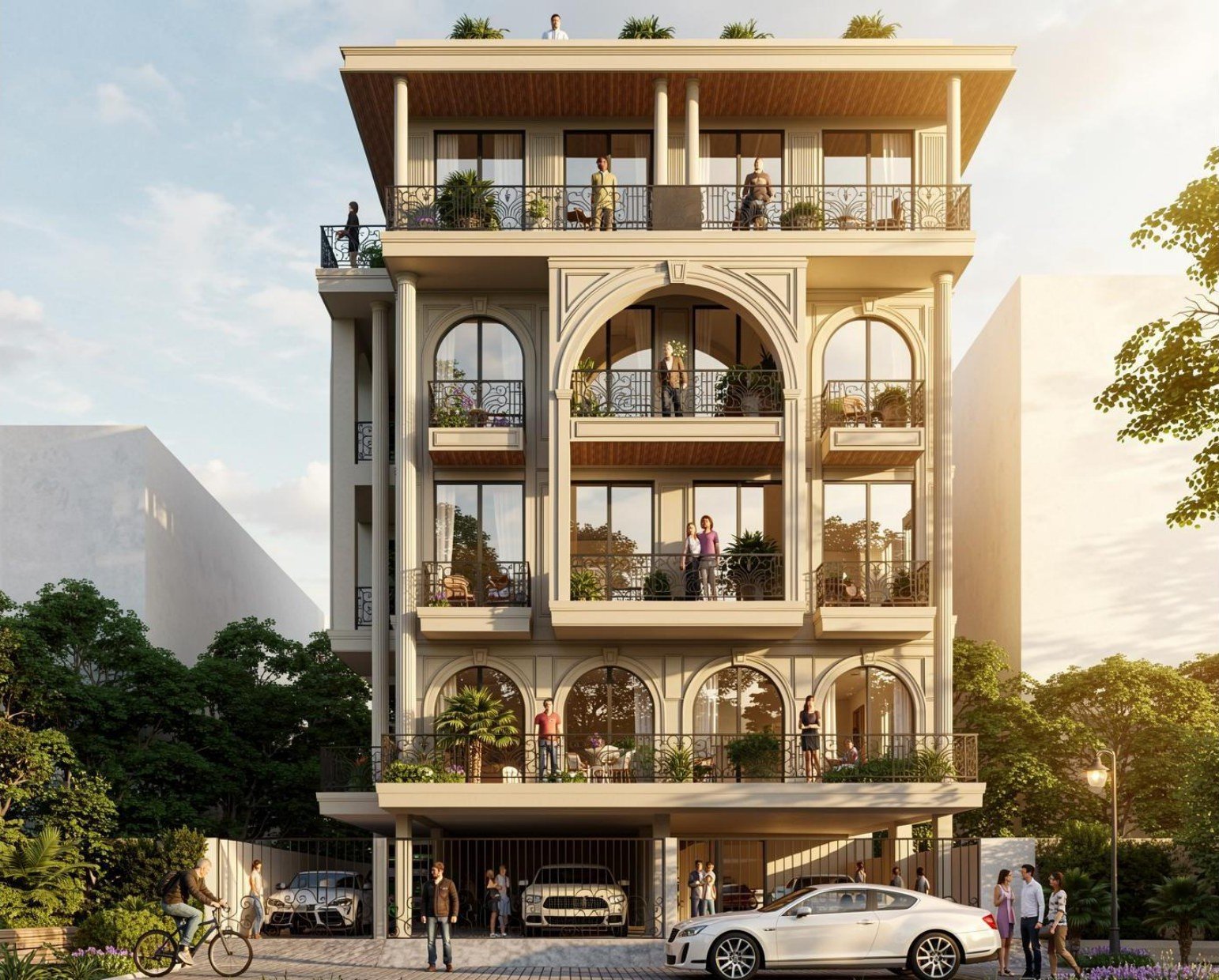
Banks treat a home loan on old builder floor property differently from a loan on a new apartment. Age matters, but rarely in the way buyers expect. The lender is not asking how old the paint is. It is asking whether the structure will still be standing, and still saleable, when the loan ends.
That question explains most of what follows: why one thirty-five-year-old floor in South Delhi is funded without trouble, why a newer floor a street away is refused, and why the paperwork usually matters more than the year on the completion certificate.
Does building age decide approval on its own?
No. A lender’s security is the floor plus its share of the land beneath it. Three things decide whether that security is acceptable: clear title, a building that matches its approvals, and a structure with enough life left to outlive the loan. Age feeds into the third. It does not override the first two.
A forty-year-old building that has been maintained, with a sanctioned plan, a clean chain of deeds and a structural certificate, can be easier to finance than a ten-year-old building with an extra floor that nobody approved.
Where age enters the file
- Technical valuation. The valuer inspects the structure, not the decor. Cracks, seepage, corroded reinforcement, a balcony that slopes away from the building or a roof that leaks after every monsoon all reduce the value the lender will accept.
- Tenure. Most lenders want the loan to end while the building still has useful life. Published policies show how much the rule varies: one public-sector lender will not lend on a home older than forty years unless its remaining life exceeds the loan tenure by ten years; another caps the building at thirty years and asks for five extra years of residual life; a third allows property age up to forty-five years at loan maturity. The numbers differ. The principle does not.
- Margin. An older building can attract a higher margin, which means a larger down payment from you. Some lenders apply the higher margin once a building crosses ten years.
- Insurance and certificates. Some lenders ask for property insurance or a structural stability certificate before disbursement, particularly where the building predates the current bye-laws.
The Delhi problem is usually paperwork, not age
Delhi’s older builder floors were often built before the current bye-laws, or on plots where a formal sanction was never taken. In regularised colonies a sanctioned plan may not exist at all. The lender then works from what does exist: the registered sale deed with the undivided share of land, the chain of title, mutation records, property tax receipts, electricity bills, and sometimes an architect’s or structural engineer’s certificate.
This is where files stall. Not because the building is old, but because the documents do not describe the building that is standing. An extra room, an enclosed balcony, a converted stilt bay, a basement used as a bedroom — each one is a query at legal and technical stage, and queries add weeks.
Before you accept any area figure, read our guide to checking the sanctioned building plan. The same comparison is what the lender’s valuer will do.
What the valuer checks for a home loan on old builder floor
| Check | Why it changes the loan |
|---|---|
| Structure age and condition | Sets the maximum tenure and the value the lender will accept |
| Built area against approved area | Area that cannot be explained by the plan may be left out of the valuation |
| Floor level and lift | A top floor without a lift narrows the resale market and the lender knows it |
| Parking | A documented, usable bay supports value; tandem parking does not |
| Road width and access | Affects marketability, and in some cases whether the building should have been approved at all |
| Terrace rights | Valued only when they are clearly assigned in the deed |
| Undivided share of land | The lender is financing the land share as much as the floor |
| Common areas | The staircase, roof and facade are part of the security |
Does a rebuilt floor count as old?
No. If the old house was demolished and a new structure built in its place, the structure’s age starts at the rebuild. What the lender wants is evidence: the sanctioned plan for the new building, the completion certificate, and the date the building was completed. A renovated floor is a different case. New tiles, new wiring and paint do not reset the age of the slab, and a valuer will still price the structure rather than the finish.
Freehold, leasehold and the power-of-attorney chain
Delhi title comes in several forms, and lenders treat them differently. A freehold plot with a registered sale deed is the simplest. A DDA leasehold property may need conversion or an NOC before a lender is comfortable. A floor still moving through a general power of attorney, an agreement to sell or a will is usually not financeable at all, whatever the possession looks like.
Check that the deed names the floor and its undivided share of land. If the share is not written down, the legal report will raise it, and the seller will need to fix it before anyone lends against the property.
How to prepare before you pay a token
- Ask for the sanctioned plan and compare it with what is built.
- Ask for the completion certificate. If it does not exist, ask the lender what it will accept instead.
- Get the sale deed with the undivided share of land, and the chain of title before it.
- Collect the latest property tax receipt and electricity bill.
- If the building is past thirty years, ask for a structural stability certificate from an empanelled engineer. Delhi’s public notice on structural safety requires an audit for buildings sanctioned after March 2001 once they complete thirty years; buildings under fifteen metres sanctioned earlier are advised to have one.
- Ask two lenders for their property-age rule in writing, including the maximum age at loan maturity and the residual life they require.
- Keep the token small and refundable if legal or technical clearance fails.
- Do not apply to five lenders at once. Each application leaves an enquiry on your credit report.
When the building’s age should stop the purchase
Some age-related problems are not about the loan at all. Look for cracking that runs through beams and columns rather than plaster, rust stains at the slab edge, a balcony that slopes away from the building, damp patches that return after every monsoon, and a staircase with cracked treads. These are expensive to repair and hard to hide at resale.
A lender’s refusal is information. If two valuers independently mark the structure down, the price you are negotiating is probably not the real price. Our construction defects checklist covers what to photograph on a second visit.
Short answers
Can I get a home loan on a forty-year-old builder floor?
Often yes, if the structure is sound, the title is clean and the building matches its approvals. Lender caps vary widely — thirty, forty and forty-five years all appear in published policies — so ask the specific lender before you commit to a purchase.
Is the interest rate higher on an older property?
Usually the rate is the same. What changes is how much the lender will lend against the property, how long it will lend for, and whether it asks for insurance or a structural certificate.
Do I need a completion certificate?
Delhi’s building rules require one, but many older floors do not have it. Some lenders will accept a registered deed, property tax records and an engineer’s certificate instead. Get that answer in writing before you pay a token.
Buying in Vasant Kunj or Nangal Dewat
If you are evaluating one of our floors, ask for the plan and the ownership papers before you pay anything. Request price and availability and tell us which floor you are considering. We will confirm which floors are open and send the current position for that unit.
For a valuation view of the same property, read why a bank’s valuation can come in below the agreed price.