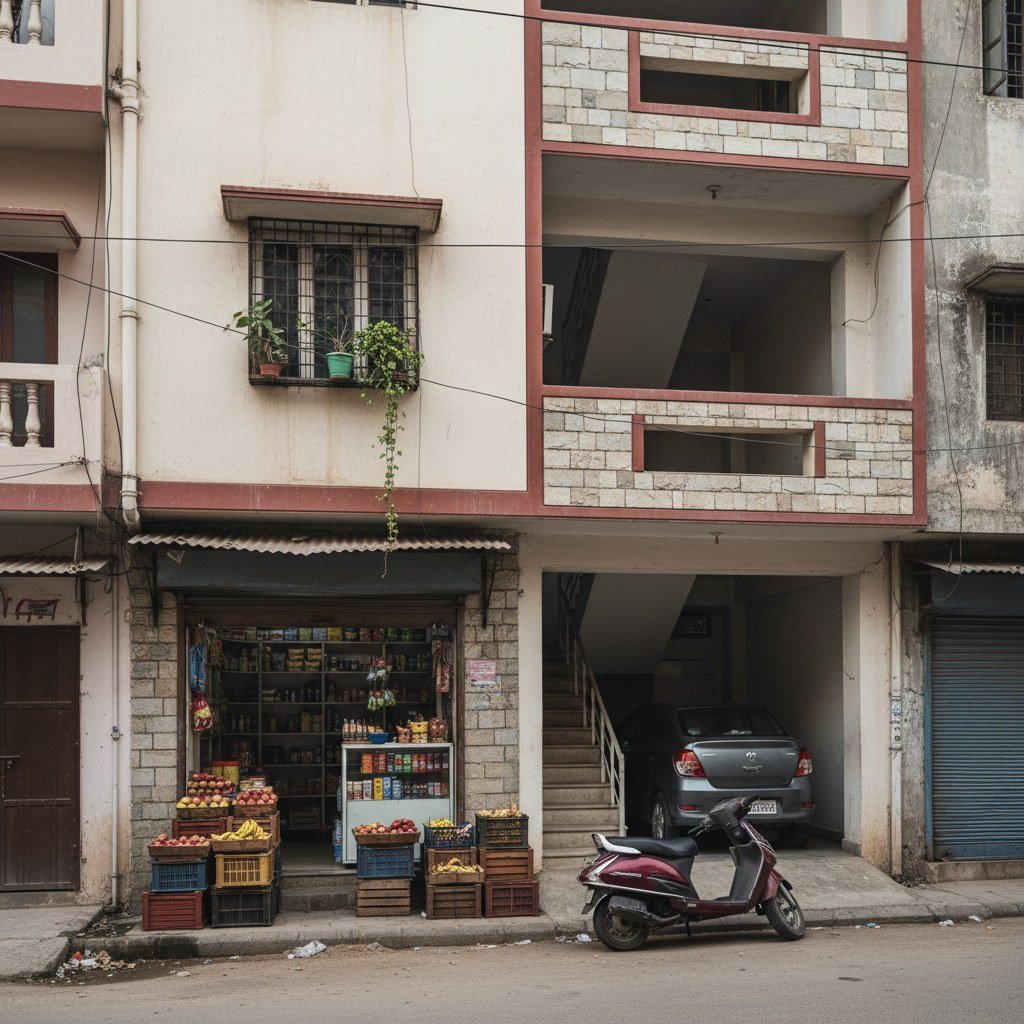
A loan against property builder floor is a mortgage over a home you already own, not a loan to buy one. The lender is not underwriting a project, a tower or a society. It is underwriting one floor, the share of land written into your deed, and the plan the building was approved on. Get those three right and the loan is unremarkable. Get one of them wrong and no amount of income repairs the file.
That is also why a builder floor asks different questions of an owner than a society flat does. The paperwork is not spread across a hundred owners and a managing committee. It rests on your documents and your building, and you carry the whole of it.
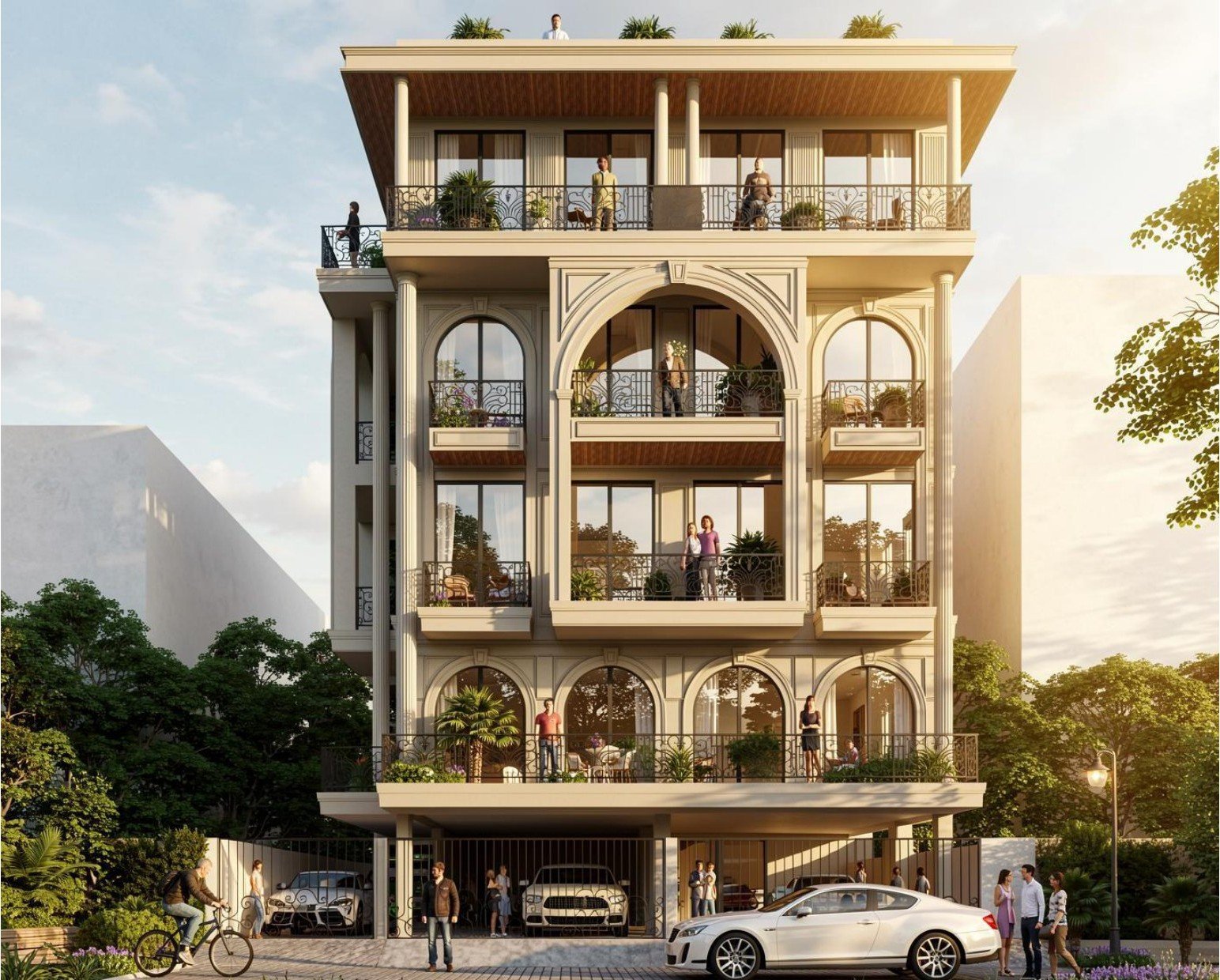
What a loan against property builder floor actually pledges
When you mortgage a builder floor, you pledge your rights in the floor and your proportionate undivided share of the plot beneath it. Both are described in the same sale deed. The lender registers its charge against that title, and if the loan is not repaid it can enforce the mortgage and sell what you pledged.
There is no society to issue a no-objection certificate and no builder to confirm possession. In a society flat, the society holds the land and the approvals, and the buyer’s file leans on them. In a builder floor, the entire legal weight sits on your own documents and the building’s approval. That single difference shapes the rest of the file.
The other floors are not part of your security. Your neighbours’ rights are unaffected by your borrowing, and their consent is not required. Their existence still matters to the lender’s valuer, who reads the building as a whole: how it is used, how it is maintained, and whether anything has been built on it that the plan does not show.
The land share carries the value
A builder floor is a floor plus a fraction of the land. The deed should say what that fraction is, as a proportion of the plot, and the same description should appear in the deed of every other floor. When a floor has been sold on an agreement that describes the first floor and nothing more, a lender’s lawyer has no defined base to value, and the file stalls until the deed is corrected.
That is why two floors of the same size on the same street can be treated very differently. The one whose deed carries a clear land share is an asset with a defined base. The one that does not is a construction on land that has never been formally divided, however good the construction is.
Read your own deed before you apply. If the share is missing or described loosely, fix the deed first. A lender will not do it for you once the application is in, and a valuer will not guess on your behalf.
The sanctioned plan is the first thing the lender reads
The valuer checks the approved plan against what stands: the ground coverage, the number of floors, the setbacks, and whether your floor matches the layout that was approved. An unauthorised addition is the most common reason a builder floor file is cut down or refused. A room built on the terrace without sanction will not be valued. A floor that does not appear on the plan at all can stop the case until it is regularised.
The plan answers a second question that valuation does not. It tells the lender what could legally happen to the building around your floor, and whether the floor you are pledging is one of the floors the authority knows about.
Age, condition and the building around it
A floor in an older building is not automatically harder to finance. What lenders react to is structural distress: cracks that have been plastered over, a slab cut repeatedly for services, a basement used as living space without approval, water damage at the edges of the terrace. On an older building the lender may ask for a structural certificate, and a valuer who cannot confirm stability will value the floor conservatively whatever the market is doing.
The building’s upkeep matters too. A staircase with no light and a roof that has never been repaired say something about how the owners have run the building between them. A valuer notices, and so does the lawyer reading the file.
When a loan against property builder floor makes sense
- Funding working capital for a business, where the alternative is unsecured borrowing that costs more.
- Replacing costlier debt, such as card balances or a personal loan, with one secured facility.
- A medical or education expense that cannot wait for a sale to complete.
- Bridging the gap when a sale is agreed but the money is months away.
- A case where you want to keep the floor and still use the value locked in it.
The test is not whether you can borrow. It is whether the money does something the floor cannot. Money that funds a business, clears expensive debt or buys time in a slow sale is doing work. Money that goes into a speculative position uses the roof over the family’s head to take a risk that the family has not agreed to.
When it does not
- Buying another property. A home loan against the property being bought is built for that, and it is the cheaper route.
- A small requirement. A top-up on an existing home loan is usually simpler, with no fresh legal work on the same asset.
- Repaying a loan that already carries a lower rate, unless the consolidated repayment is genuinely easier to carry.
- Covering monthly household expenses. That is a sign the budget has broken, not a use for a secured loan.
- When the floor is jointly owned and one owner will not sign.
- When this is the family’s only home and the plan depends on the asset rising.
Joint ownership and the other floors
Every name on the deed must be a borrower or a consenting mortgagor. If your spouse, a parent or a sibling holds a share, their signature is part of the security, and a lender will not proceed without it. This is the most common reason a file that is ready in every other respect sits unsigned for weeks.
The other floor owners do not have to agree to your borrowing. But their rights shape what a lender can do if it ever has to sell. Access to the staircase, the roof and the services runs through parts of the building they also own, and a buyer of your floor is buying into that arrangement. A building where the owners have put their understanding on paper about shared costs and access is easier to finance than one where nothing has ever been written down.
What the file looks like
Banks publish their own checklists and they differ from each other. Ask the lender for its list rather than relying on a comparison site. These are the documents that appear on almost all of them.
The property:
- Registered sale deed, with the land share described.
- The chain of earlier deeds for the plot.
- The sanctioned building plan.
- Latest property tax receipts.
- Proof of freehold status, or the lease deed where the plot is leasehold.
- Encumbrance certificate, where the lender asks for one.
- Society or association documents, if the floor sits inside one.
The borrower:
- PAN, Aadhaar and address proof.
- Income proof: salary slips and Form 16 for a salaried borrower, income tax returns with computation and financial statements for a business owner.
- Bank statements for the period the lender asks for.
- Statements for any loans already running.
A gap in the chain of deeds is not automatically fatal. A certified copy from the sub-registrar’s records can close it. What stops a file is a gap that nobody has explained.
What happens if you cannot repay
A loan against property is secured. If the repayments stop, the lender can enforce the mortgage, and the floor can be sold to recover the debt. That is not a clause in the fine print; it is the point of the product. The amount borrowed should be what the household can service through a bad year, not what a good year could carry.
This is why a lender asks what the money is for and how it will be repaid. Answer that honestly in your own head before the application, and the rest of the process is paperwork. How a lender values a builder floor sets out the valuation step in more detail.
Questions to ask before you sign
- Which property is the security, and is the land share correctly described in it?
- Is the interest fixed or floating, and what resets it?
- Is it a term loan or an overdraft, and does the lender expect a clean-up each year?
- What is charged for processing, legal work and valuation, and is insurance bundled?
- What happens on early repayment?
- Is a co-applicant required, and does adding a guarantor change the terms?
The papers you can prepare
The lender’s decision is not in your hands. The file is. A sanctioned plan that matches the building, a deed that names your share of the land and a clean chain of title put you ahead of most applications before the valuer arrives. Where those three are weak, no lender will paper over the gap, and the work of fixing them is cheaper before a buyer or a bank is involved.
If you own a floor in Vasant Kunj, Vasant Enclave or Nangal Dewat and want to know what the building’s record shows before a lender sees it, talk to us and we will put the sanctioned plan and the deed side by side. How to check a sanctioned building plan in Delhi covers the first document to pull out, and selling a builder floor in Delhi sets out the other route if you would rather sell than borrow. To see what is available instead, the floors we build lists the buildings, and you can request price and availability for the floors currently open.