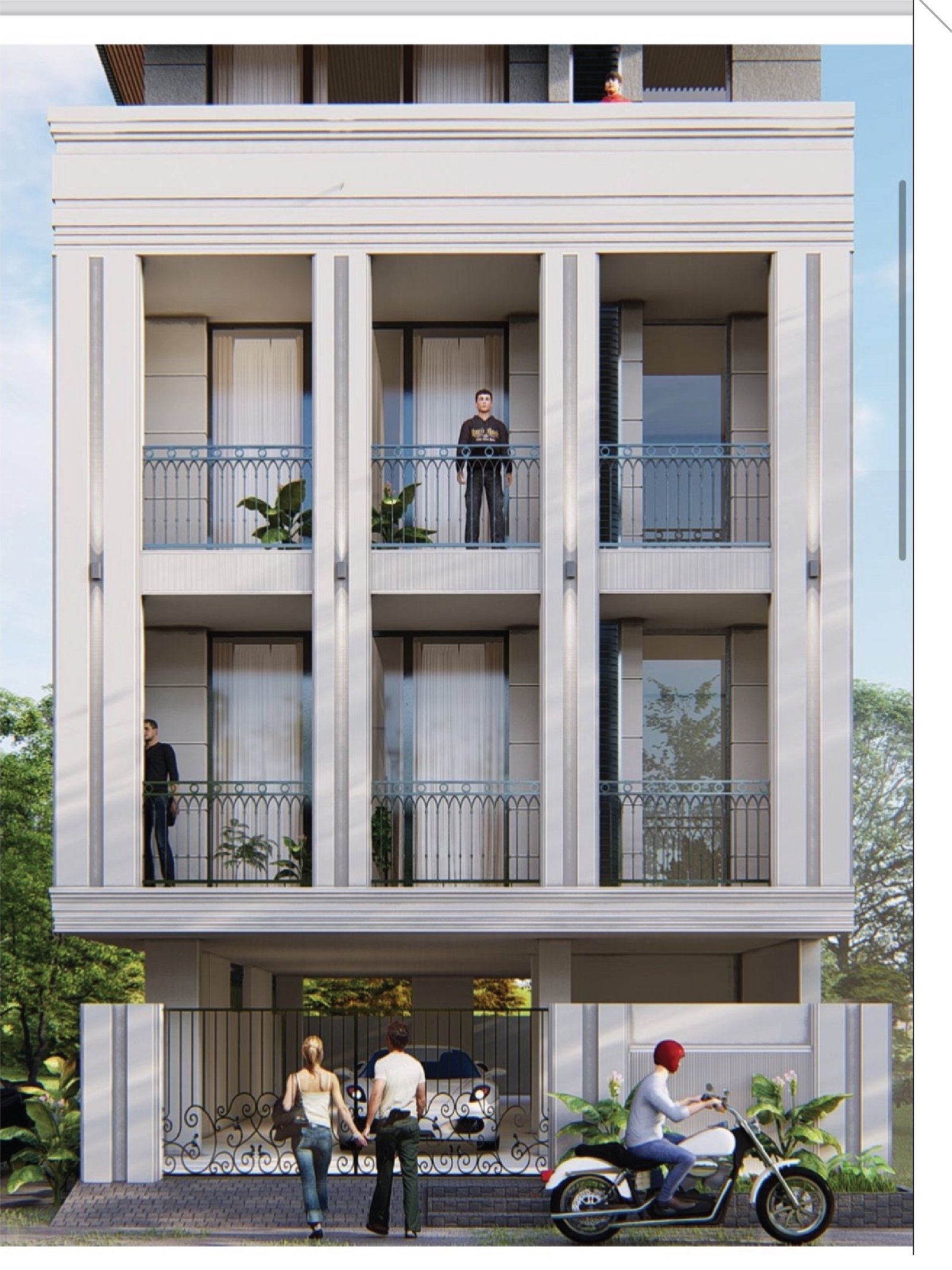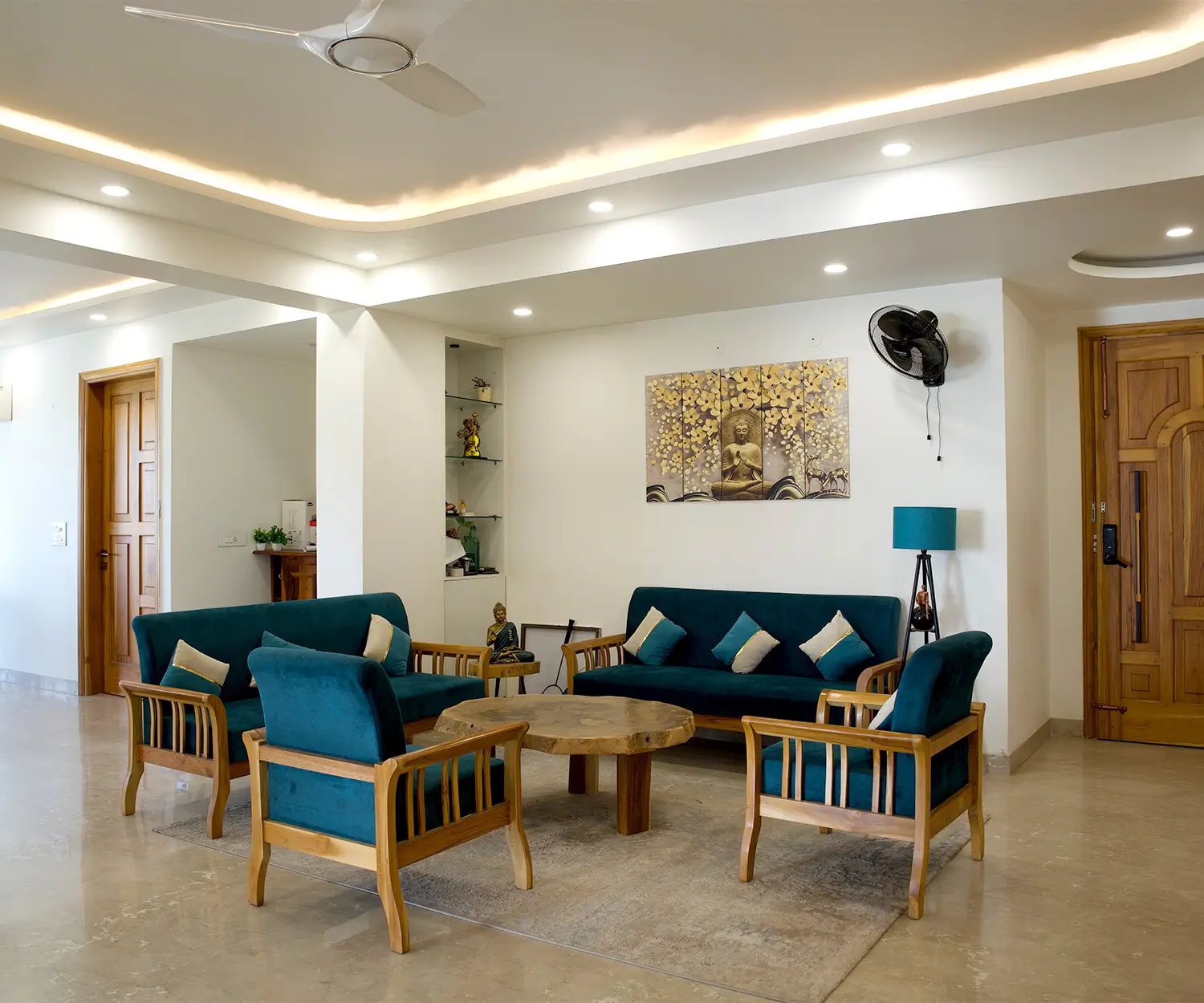
The two labels are used almost interchangeably in Delhi property listings, and that is where the confusion starts. An independent floor in Delhi usually means a floor with its own access and its own services. A builder floor means a floor built by a developer to be sold. Most builder floors are independent in the everyday sense, but not every independent floor was built by a builder, and the difference shows up in paperwork, price and loan eligibility.
The Two Words Describe Different Things
An independent floor is a description of how a home functions. It has its own entrance, its own kitchen, its own bathrooms and its own utility connections. It does not depend on another household for access or services.
A builder floor is a description of how a home came to exist. A developer bought or tied up a plot, built a low-rise building on it, and sells the floors separately. The units are usually identical because they were built to a single plan.
The overlap is large: a newly built builder floor is almost always an independent floor. The reverse is not true. Many independent floors in older Delhi colonies were built by a family for its own use, and one floor was later rented out or sold. That history is fine, but it leaves a different set of documents behind.
Independent Floor in Delhi vs Builder Floor: Seven Practical Differences
- Who built it. An owner-built floor was constructed for a family, often with better fittings on the floor the family occupied and simpler fittings elsewhere. A builder floor is built speculatively, so finishes are uniform across all units.
- Age and structure. Independent floors in established colonies are often thirty or forty years old, with original plumbing and wiring. Builder floors are usually newer, though a resale builder floor can be a decade old.
- Sanction. A house built decades ago may not match today’s bye-laws, even if it was legal when built. Ask which plan applied at the time and compare it with what stands on the plot.
- Land share documentation. Developer-built floors normally record a land fraction in the sale deed. Floors created by dividing a family house sometimes do not, because the division was informal.
- Services. Independent means separate electricity and water connections and a staircase used by one household. Shared means one meter, one pump and one staircase for the whole building.
- Parking. Builder floors usually provide a stilt bay. Older independent floors often have open parking in the front setback, which is fine until a second car arrives.
- Lending and resale. Banks are more comfortable with a sanctioned plan and a documented land share. That comfort translates into faster approvals and fewer valuation disputes.
Notice what is missing from that list: the number of floors, the size of the rooms and the quality of the tiles. Those things vary within both categories. The differences that change what you own are the ones above.
What “Independent” Should Actually Mean
Test the claim before you accept it. A floor is independent when all of the following are true.
- You reach it without walking through anyone else’s home or courtyard.
- It has its own electricity meter and consumer number, in the seller’s name and transferable to you.
- It has its own water connection, or a metered and agreed share of a shared connection.
- It has its own kitchen, bathrooms and drainage connections.
- The staircase it uses is not the only passage to another household’s front door.
If any one of those fails, the floor is not independent in the way that affects daily life. A floor with its own entrance but a shared electricity meter is still a floor where the bill has to be divided each month, and where one household’s non-payment can affect the other.
The Paperwork That Decides the Value
Whether the floor was built by a developer or by a family, the sale has to be completed by a registered instrument. Under the Registration Act, 1908, a sale of immovable property requires a registered deed, which is why a general power of attorney is not a substitute for ownership. The text of the Act is published on India Code.
In practice, five documents decide whether a floor is straightforward to buy.
- The sale deed, stamped at the rate applicable on the higher of the transaction value and the circle rate, and registered at the sub-registrar.
- The land share, expressed in the deed as a fraction or a percentage of the plot.
- The sanctioned plan, and a building that matches it.
- Mutation in the municipal records, showing the seller as the recorded owner.
- Property tax receipts, with no arrears attached to the property.
Stamp duty and registration are calculated on the circle rate when the declared value falls below it, which is a common situation in older colonies. Because the rates are revised by notification, check the current figures on the Delhi Revenue Department site, and use our explainer on Delhi circle rates for 2026 to understand how a colony’s category is assigned. If you are buying an older independent floor, the document checklist applies almost unchanged.
Where the Two Types Sit in the Delhi Market
In the older colonies of South Delhi, both types coexist on the same street. A road may have a 1970s house divided into two independent floors, a 1990s house still occupied by one family, and a recently rebuilt building with three builder floors. Prices on that road can differ sharply, and the differences usually trace back to the plot, the age of the structure and the documents rather than the label.
In redeveloped colonies, the older independent floors are being replaced steadily. Once a plot is rebuilt, what comes out is a builder floor by definition. Therefore, a buyer looking for newer construction in these colonies is effectively looking at builder floors, whatever the listing headline says.
Which One Suits You
Choose an independent floor when you want a specific street or plot, when you are willing to renovate, or when you value the older construction pattern: thicker walls, larger rooms, smaller windows. Choose a builder floor when you want newer services, a lift, stilt parking and a cleaner document trail from the start.
Neither is superior in the abstract. A well-documented floor on a good plot holds value; a poorly documented floor on the same plot does not, regardless of what it is called. The label is a starting point for questions, not a substitute for them.
What to Check on the Site Visit
- Stand at the entrance and work out who else uses that staircase.
- Open the electricity meter box and count the meters.
- Ask where the water tank sits and who cleans it.
- Look at the ceiling below the terrace for old seepage marks.
- Check the height of the stilt and the turning circle for a car.
- Look at the boundary with the neighbouring plot, especially at the rear.
Common Questions
Is an independent floor the same as a builder floor?
Not exactly. An independent floor describes the separation of access and services. A builder floor describes who built it and why. A newly built builder floor is normally independent, but the two terms are not interchangeable in a sale deed.
Does an independent floor need a sanctioned plan?
A building should have been sanctioned when it was constructed. If the floor predates current bye-laws, the plan in force at the time is the relevant one. A lawyer can check the municipal record, and a seller who cannot produce any sanction at all is a warning sign.
Can I buy only one floor of an independent house?
Yes, provided the sale deed transfers both the floor and a defined share of the land beneath it. A sale of the floor alone, with no land share, creates a property that is hard to mortgage and hard to sell later.
Which is easier to finance?
The one with a clear sanctioned plan, a recorded land share and a clean title chain. In practice that is often a builder floor sold by a developer who built the building as a single project, because the documents were created together. However, an independent floor with the same paperwork is equally financeable.
Which resells faster?
Buyers respond to construction quality, floor level and parking more than to the label. A first-floor unit with a lift, a stilt bay and clean papers will move faster than a top-floor unit without a lift, in either category.
Where to Go Next
If you are comparing specific floors, read our guide to the registry process in Delhi so you know what happens after the price is agreed, and our note on freehold and leasehold property because the tenure of the land affects what you can do with the floor later. Rana Infra builds and sells builder floors in South Delhi. If you want a second opinion on the documents of a floor you are considering, you can reach us through our contact page.