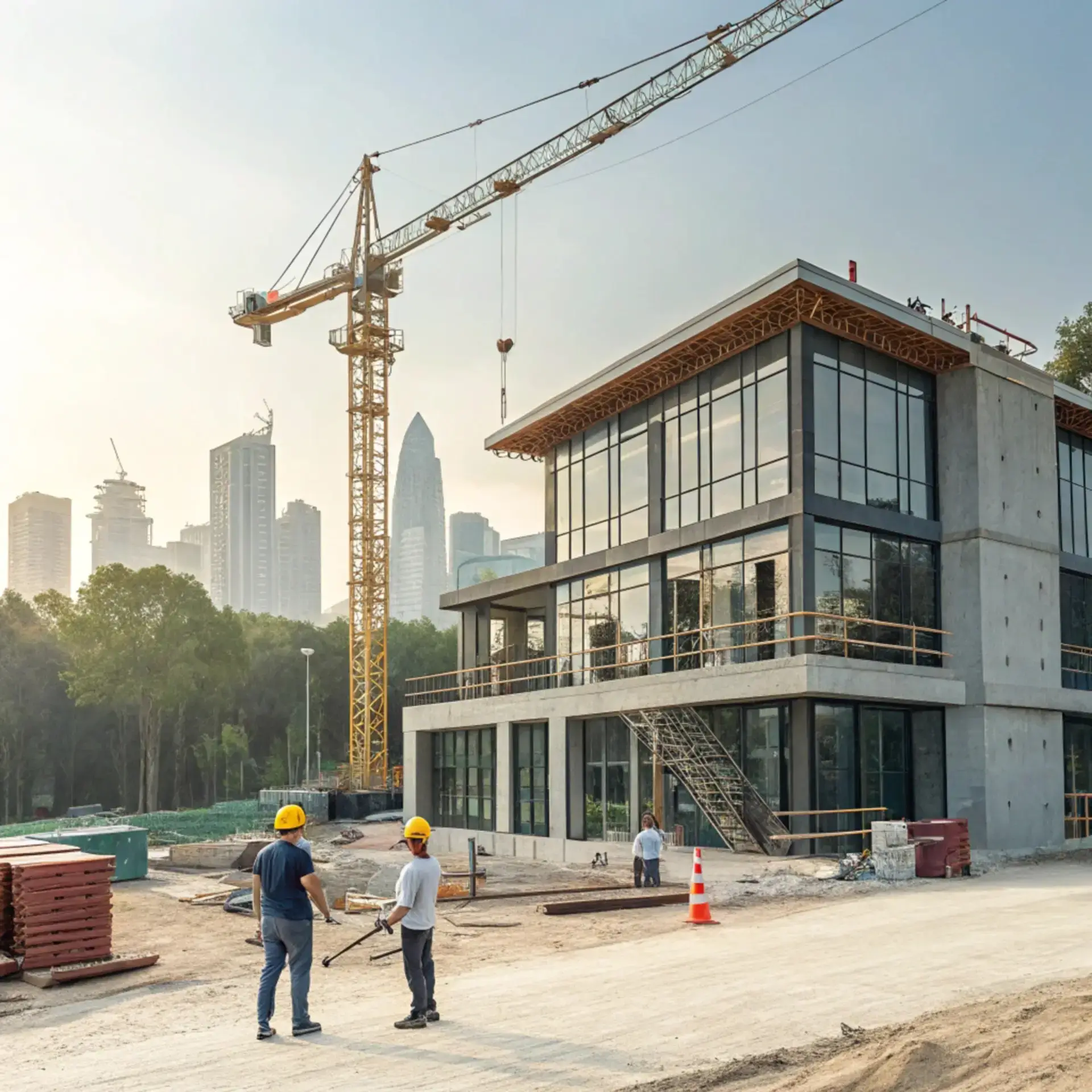

RERA 4-month extension has become an important real-estate update for homebuyers, developers and property investors in India. The Ministry of Housing and Urban Affairs has advised State Real Estate Regulatory Authorities to consider a four-month extension in registration and completion timelines for eligible real estate projects affected by the West Asia situation and related supply-chain disruptions.
For homebuyers, this update raises an important question: Will possession be delayed?
For developers, it brings another question: Will this extension reduce regulatory pressure if genuine project delays are caused by material shortages or supply-chain issues?
The answer is not the same for every project. The extension is meant for eligible projects, and State RERA authorities will play a key role in implementation. Buyers should not assume that every project automatically gets extra time, and developers should not treat it as a free pass for poor planning or avoidable delay.
For buyers in South Delhi, New Delhi, Gurugram and Delhi NCR, this is a good time to understand how RERA timelines, possession dates, force majeure and buyer rights work.
At Rana Infra, we believe that a good real-estate decision should be based on both quality construction and clear documentation. A premium home should give confidence not only in design, but also in delivery, compliance and transparency.
What Is the RERA 4-Month Extension?
The RERA 4-month extension refers to the recent advisory asking State RERAs to grant a four-month extension in registration and completion timelines for eligible real estate projects affected by disruptions linked to the West Asia situation. Reports say the advisory applies to projects whose completion date, revised completion date or extended completion date falls on or after February 28, 2026.
This extension is connected to disruption in global supply chains, shortages of construction materials and delays in project execution.
In simple words, if a qualifying project has faced genuine delay because of supply-chain disruption, the developer may get additional time under RERA compliance timelines.
Why Has This Extension Been Given?
Real-estate projects depend on materials, labour, logistics, imports, vendor delivery and construction schedules. When global supply chains are affected, projects may face delays in procurement and execution.
According to reports, the ongoing West Asia situation has affected construction material availability and timely execution, which is why the Ministry has advised State RERAs to consider relief for eligible projects.
The extension is being connected with the idea of force majeure, which means an event beyond normal control that affects regular project development. Section 6 of the RERA Act allows extension of project registration due to force majeure, and the Act’s explanation includes “war” among force majeure events.
Does This Mean Every Builder Gets 4 Extra Months?
No. Buyers should understand this clearly.
The update is an advisory to State RERA authorities for eligible projects affected by the West Asia disruption. It should not be understood as a blanket delay permission for every real-estate project in India. State RERAs will decide how to apply it, and eligibility will matter.
A buyer should ask:
- Is this project RERA-registered?
- Has the project officially received an extension?
- What is the revised RERA completion date?
- Is the delay linked to genuine supply-chain disruption?
- Has the developer updated buyers in writing?
- Is the agreement possession date also being affected?
- What is the construction status on site?
Do not depend only on a verbal statement from a sales team. Always check the official RERA record.
What It Means for Homebuyers
For homebuyers, the RERA 4-month extension may mean that the official completion timeline of an eligible project can be pushed forward by four months.
This can affect:
- Expected possession date
- Construction progress tracking
- Loan planning
- Rental planning
- Interior planning
- Payment schedule expectations
- Legal rights in case of delay
- Buyer communication with the developer
However, buyers should also remember that RERA extension and the possession date written in the buyer agreement may need to be reviewed carefully. Section 18 of the RERA Act provides remedies when the promoter fails to complete or give possession according to the terms of the agreement for sale, including refund with interest or delay interest if the buyer continues with the project.
This means buyers should not panic, but they should stay informed and document everything.
What It Means for Developers
For developers, the extension may provide regulatory breathing space if the project has genuinely been affected by supply-chain disruption.
It may help developers with:
- RERA registration validity
- Revised project completion timeline
- Lower immediate compliance pressure
- Better time to manage procurement delays
- More practical construction scheduling
- Reduced risk of penalties for eligible delay
Industry bodies have welcomed the advisory because it gives relief to developers affected by material shortages and logistics disruptions.
But responsible developers should still maintain transparency with buyers. A RERA extension should not become an excuse for weak communication, poor site progress or unclear handover.
RERA Extension vs Possession Date: What Buyers Should Understand
This is the most important part for homebuyers.
There are usually two timelines buyers should check:
| Timeline | Meaning |
|---|---|
| RERA completion date | Date registered or updated on the RERA portal |
| Agreement possession date | Date promised in the buyer agreement or sale agreement |
The RERA extension may revise the regulatory project timeline, but buyers should still review their agreement terms, payment schedule and legal rights. Section 18 of RERA specifically refers to failure to complete or give possession according to the terms of the agreement for sale.
For this reason, buyers should keep all documents safely:
- Booking form
- Builder-buyer agreement
- Payment receipts
- Demand letters
- RERA registration details
- Construction update emails
- Extension notice, if any
- Official RERA order
- Possession communication
Can Homebuyers Claim Delay Compensation After This Extension?
This depends on the project facts, agreement terms, RERA order and applicable State RERA decision.
The extension may give eligible developers regulatory relief for a defined period. However, homebuyer rights under RERA should be assessed based on the agreement, actual delay, official extension status and RERA authority interpretation.
Section 18 of RERA says that if the promoter fails to complete or give possession according to the agreement, the allottee may seek refund with interest or, if continuing in the project, interest for every month of delay until possession is handed over.
Buyers should speak to a qualified legal professional before making a compensation or refund claim, especially if the project has received an official extension.
What Buyers Should Check on the RERA Website
Before reacting to any news or builder message, buyers should check the project’s official RERA status.
Check:
- Project registration number
- Original completion date
- Revised completion date
- Extended completion date
- Construction progress updates
- Quarterly project updates
- Complaints, if visible
- Promoter details
- Approved plans
- Extension order or notice
For Delhi NCR buyers, this is especially important because projects may fall under different RERA authorities depending on location — Delhi RERA, Haryana RERA for Gurugram, or UP RERA for Noida and Ghaziabad.
Why This Matters for Delhi NCR Property Buyers
Delhi NCR is a large real-estate market with different project types — apartments, plotted developments, builder floors, commercial spaces, villas and townships.
For buyers in South Delhi, New Delhi, Gurugram, Noida, Faridabad and wider Delhi NCR, the impact of the RERA extension will depend on:
- Whether the project is registered under RERA
- Whether it is eligible for extension
- Whether the project completion date falls within the advisory scope
- Whether supply-chain disruption actually affected the project
- Whether the developer communicates clearly
- Whether the buyer agreement has a different possession timeline
- Whether the project is already delayed beyond reasonable limits
A buyer should not judge a project only by marketing claims. Documents, RERA status, site progress and builder track record matter more.
Impact on Under-Construction Projects
Under-construction projects may be most affected by the RERA 4-month extension.
For buyers, this may mean:
- Possession may move ahead by four months for eligible projects
- Interior planning may need to be rescheduled
- Rental planning may need adjustment
- Home loan disbursement timing may change
- Buyers should track site progress more carefully
For developers, it may mean:
- More time to complete delayed work
- More time to procure materials
- More time to manage contractor schedules
- More flexibility under RERA registration timelines
But the extension should be matched with actual site progress. If no meaningful work is happening, buyers should ask stronger questions.
Impact on Ready-to-Move and Near-Possession Homes
For ready-to-move or near-possession homes, the impact may be limited unless the project still has pending completion or registration timeline issues.
Buyers should ask:
- Is the home ready for possession?
- Are finishing works complete?
- Are utilities connected?
- Is lift functioning?
- Is parking ready?
- Are common areas completed?
- Are possession documents ready?
- Is any RERA extension being claimed?
- Is the delay only technical or actual?
Near-possession buyers should focus on documentation and handover clarity.
Impact on Builder Floors
Many buyers in South Delhi and New Delhi prefer builder floors because they offer more privacy, low-rise living and larger usable spaces.
For builder-floor buyers, the RERA extension may or may not apply depending on whether the project is RERA-registered and falls under the applicable criteria. Buyers should not assume that every builder floor is covered under the same RERA extension.
Before buying a builder floor, check:
- Land title
- Sale deed clarity
- Sanctioned building plan
- Completion status
- Floor-wise ownership
- Parking rights
- Terrace rights
- Mutation support
- Utility connections
- Construction quality
- Handover documents
For builder floors, legal clarity and construction quality are both important.
Red Flags Buyers Should Watch After the Extension
The RERA extension is meant for genuine project disruption. Buyers should be careful if a developer uses it casually.
Watch for these red flags:
- Builder says “RERA extension mil gaya” but gives no document
- No official RERA update is visible
- Construction progress is weak
- Payment demand continues without matching site work
- Builder avoids written communication
- Agreement possession date is ignored
- Buyer queries are not answered
- Extension is used even when project was already delayed
- No revised handover plan is shared
A transparent developer should share clear written updates.
Questions Homebuyers Should Ask Developers
Before accepting any delay explanation, ask:
- Has the project officially received the RERA 4-month extension?
- Where is the extension order available?
- What was the original completion date?
- What is the revised RERA completion date?
- How has the West Asia disruption affected this project specifically?
- Which materials or activities were delayed?
- What is the current construction progress?
- Will the possession date in the agreement change?
- Will buyers receive written communication?
- Will payment schedules be adjusted according to progress?
- What is the new handover plan?
- What happens if the project is delayed beyond the extended date?
These questions help buyers move beyond general news and focus on their specific project.
What Developers Should Do Now
Developers should use this extension responsibly.
They should:
- Inform buyers clearly
- Update RERA records where required
- Share revised construction timelines
- Explain genuine supply-chain issues
- Avoid vague delay excuses
- Maintain construction progress
- Keep payment demands linked to actual work
- Provide regular updates
- Prepare handover documentation early
- Keep quality control strong
A developer’s credibility is built during difficult timelines, not only during sales.
Buyer Checklist: Before Booking Any Project in 2026
If you are planning to buy property in 2026, use this checklist:
| Check | Why It Matters |
|---|---|
| RERA registration | Confirms project is registered, where applicable |
| RERA completion date | Shows official project timeline |
| Agreement possession date | Shows buyer-level promise |
| Extension status | Confirms whether extra time is officially granted |
| Construction progress | Shows actual site movement |
| Builder track record | Helps judge delivery credibility |
| Payment schedule | Should match construction milestone |
| Title documents | Confirms ownership clarity |
| Sanctioned plan | Confirms approved construction |
| Handover documents | Important before final payment |
This checklist is useful for buyers in South Delhi, New Delhi, Gurugram and Delhi NCR.
Rana Infra’s View
At Rana Infra, we see this update as a reminder that real-estate buyers should look beyond only price, location and finishes. Timelines, documentation, construction planning, buyer communication and handover clarity are equally important.
A genuine delay can happen in real estate, especially when supply chains are affected. But a responsible developer should communicate clearly and continue working toward completion.
For homebuyers, the safest approach is simple:
Check documents. Check RERA status where applicable. Check construction quality. Check written timelines. Do not depend only on verbal promises.
A premium builder floor or residence should provide peace of mind from booking to handover.
Conclusion
The RERA 4-month extension gives eligible real estate projects additional time because of disruption linked to the West Asia situation. For developers, it may reduce compliance pressure and support project completion. For homebuyers, it means they should carefully check official RERA updates, revised timelines, agreement possession dates and project progress before reacting.
This extension does not mean every builder automatically gets extra time. It also does not mean buyers should stop asking questions.
For buyers in South Delhi, New Delhi, Gurugram and Delhi NCR, the key is to stay informed, verify documents and choose developers who value transparency.
CTA:
Planning to buy a premium builder floor in South Delhi or New Delhi? Connect with Rana Infra for thoughtfully planned homes with quality construction, clear documentation and buyer-first transparency.
Related reading
Related guides on this site: