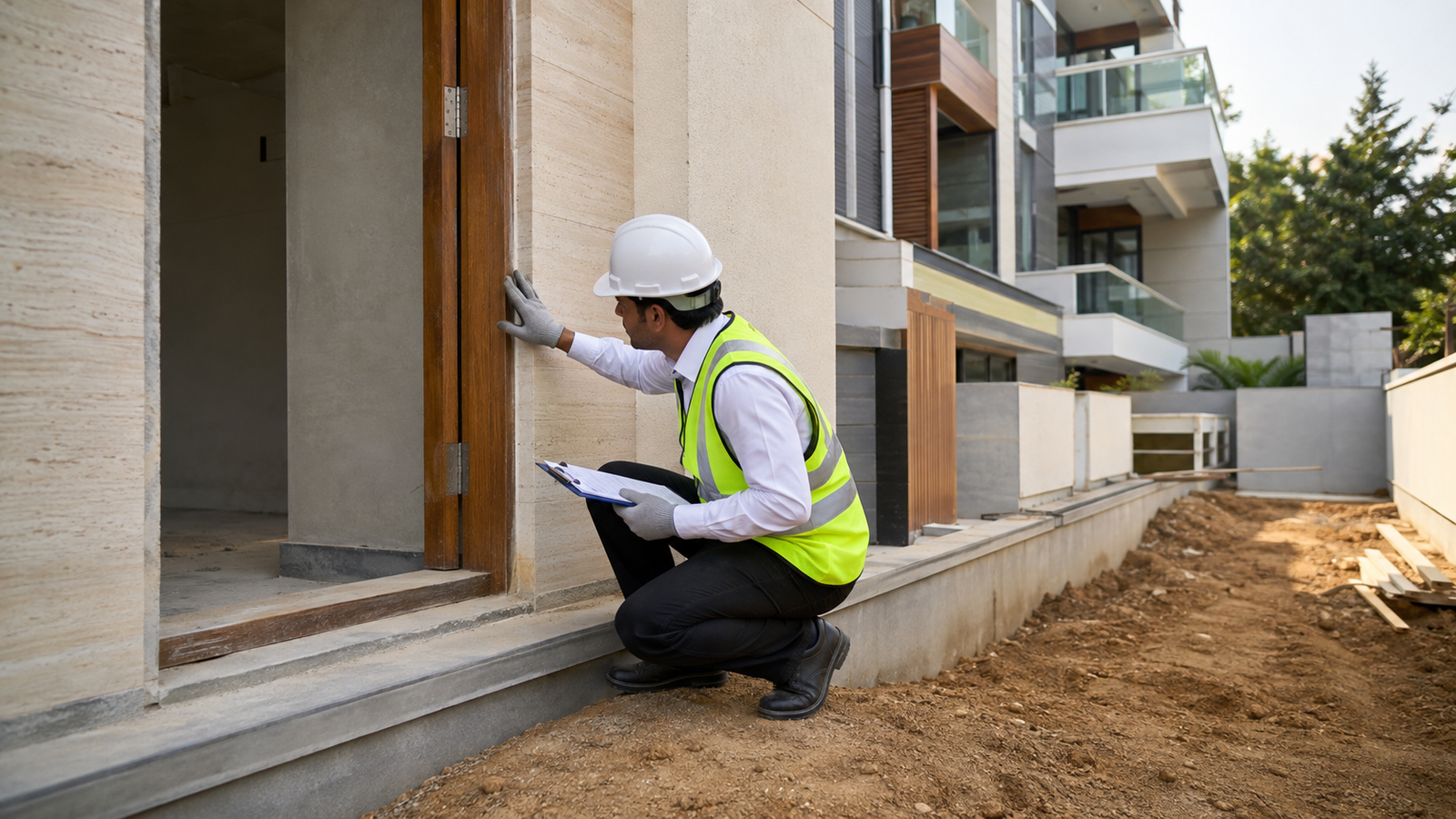

Builder floor waterproofing should be tested before possession, when unfinished defects can still be traced and corrected without disturbing occupied rooms. Fresh paint can hide an old damp patch, while dry weather can make a weak terrace or balcony appear problem-free. A careful buyer therefore looks beyond the surface and asks how every wet area was built, tested and documented.
This guide explains practical checks for a South Delhi home. It does not replace an architect, waterproofing specialist or project-specific test method. Any test involving stored water, concealed services or occupied premises should be supervised by the responsible site team.
Where Water Commonly Enters a Builder Floor
Water does not always appear directly below its entry point. It can travel along a pipe, slab joint, wall chase or false ceiling before becoming visible. Common risk areas include terraces, sunken toilets, balconies, planters, external walls, window perimeters, plumbing shafts and stilt or basement levels.
Ask the site engineer to map each wet zone and the area below it. That simple drawing helps everyone inspect the correct ceiling, wall and service shaft during testing.
Builder Floor Waterproofing Documents to Request
Before any physical test, request the waterproofing system details. The handover record should identify the product or system, application area, installer, application date, test performed and warranty terms, if any.
Useful records include:
- Wet-area and terrace drawings showing slopes and outlets.
- Product data sheets and batch information where available.
- Photographs taken before screed, tiles or stone covered the treatment.
- Test records with dates, observations and corrective work.
- Contact details for the responsible contractor.
- Clear exclusions and maintenance conditions in any warranty.
A brand name alone is not proof of workmanship. Surface preparation, junction treatment, curing, protection and drainage all influence performance.
Run a Builder Floor Waterproofing Terrace Test
A terrace ponding test can reveal leakage, but the loading, water depth and duration must be approved by the project professional. Do not block outlets or store water without site supervision.
Before the test, inspect parapet junctions, pipe sleeves, rainwater outlets, door thresholds and the base of solar or service equipment. During the agreed test, examine the ceiling and walls below, including cupboards and false-ceiling access panels. Mark any dampness so its growth can be monitored.
After the water is released, confirm that the surface drains without persistent ponds. Waterproofing and drainage work together; a sound membrane should not be expected to compensate for poor slopes or blocked outlets.
Test Bathrooms Before Fixtures Hide the Evidence
Bathrooms require attention at floor traps, pipe penetrations, shower zones, wall-floor junctions and door thresholds. Ask whether the wet area was tested before the final tile or stone installation. If a supervised test is repeated, check the room below and the plumbing shaft as well as the bathroom itself.
Then operate every tap, shower, flush and health faucet. This separates supply or waste-pipe leakage from failure of the waterproof layer. Water should move toward the drain instead of collecting beside the WC, vanity or shower partition.
Minor standing water may seem cosmetic, but repeated wetting can stain joints, encourage odour and make the room difficult to maintain.
Inspect Balconies, Planters and External Walls
Balcony drainage check points include the outward slope, rainwater outlet, threshold level, railing or façade penetrations and the ceiling below. Pouring a small amount of water can confirm direction of flow, but a full test should follow the approved method.
Built-in planters deserve separate drainage and waterproofing details. Soil can hide blocked outlets and keep a wall wet for long periods. Ask how roots, overflow and maintenance access are managed.
On external walls, look for cracks, failed sealant, hollow render, discolouration and open service penetrations. Window corners often reveal moisture first because several materials meet there.
Check Stilt, Basement and Service Areas
At the lowest level, distinguish rain entry, plumbing leakage, groundwater-related seepage and condensation. Their remedies are different. Inspect retaining walls, lift pits where access is authorised, pump areas, service trenches, ramps and the base of shafts.
Ask where rainwater will go during an intense storm and how pumps receive backup power. A dry inspection on a sunny day should be supported by maintenance records and evidence from the previous monsoon where available.
Record Every Builder Floor Waterproofing Finding
Use a room-by-room snag list with a photograph, location, date, weather condition and responsible person. Avoid vague notes such as “damp wall.” Write “moisture mark 300 mm below balcony outlet on bedroom ceiling,” for example.
After repair, repeat the relevant test. Repainting is not closure unless the moisture source has been corrected and the substrate has dried. Keep final records with warranties and concealed-work photographs in the home handover file.
Builder Floor Waterproofing Possession Checklist
Before accepting the home, confirm:
- Terrace and balcony slopes lead to clear outlets.
- Bathroom fixtures, traps and supply lines operate without leakage.
- Ceilings below wet areas remain dry during supervised tests.
- Window, pipe and façade junctions are sealed and finished.
- Stilt or basement drainage and pumps are accessible.
- Repair items have been retested, not merely repainted.
- Product, contractor and warranty information has been handed over.
Good builder floor waterproofing is largely invisible after completion. That is why evidence, testing and accountable closure matter more than a flawless coat of paint on possession day.