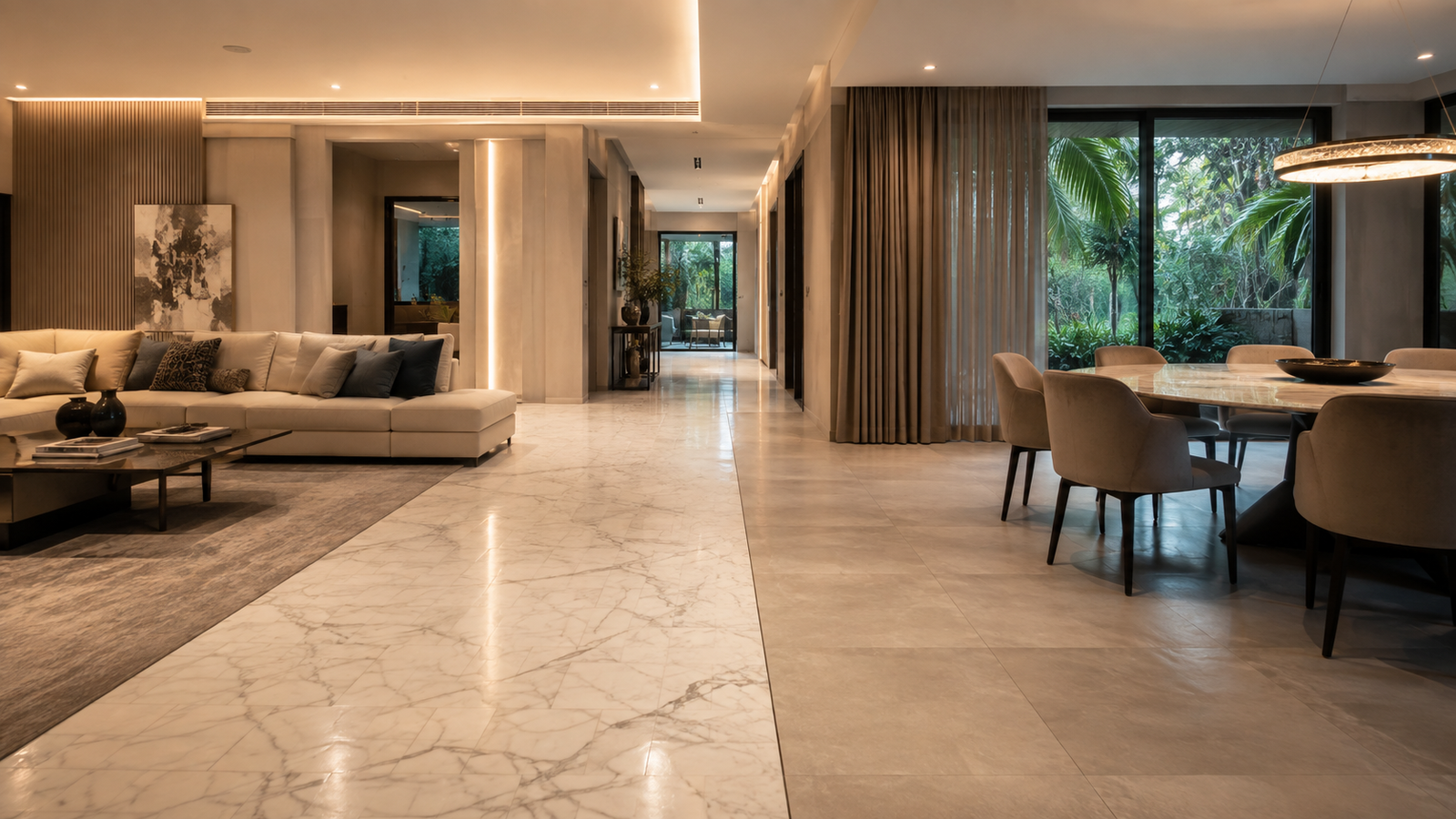
Marble vs large-format tiles is a choice between two very different material experiences. Natural marble offers variation, depth and the possibility of repolishing, while porcelain tiles can provide controlled colour, low porosity and fewer visible joints at large sizes. Neither option is automatically more luxurious or more practical in every room.
For a builder floor, compare the installed floor rather than a small showroom sample. Substrate preparation, layout, cutting, adhesives, movement joints and workmanship can matter as much as the finish itself.
Define the Look You Want to Live With
Marble is a natural material, so veins, shade and small imperfections vary from slab to slab. Many owners value that individuality. Others prefer predictable tone and pattern, especially across an open living and dining area.
Large-format porcelain can imitate stone, concrete or other surfaces with controlled variation. Review several pieces together because a single sample cannot show pattern repetition or how printed veins continue across joints.
Ask the designer to prepare a room layout showing joint lines, slab direction, borders and transitions. The same material can look calm or busy depending on placement.
Marble vs Large-Format Tiles for Installation
Marble installation may involve slab selection, dry laying, cutting, bedding, joint filling, grinding and polishing according to the chosen system. The stone must be assessed for thickness, strength, moisture sensitivity and treatment needs.
Large-format tiles demand an exceptionally flat substrate, appropriate adhesive coverage, safe handling and accurate levelling. A large piece can bridge a hollow or uneven bed that later causes cracking or sound differences. Manufacturer instructions for adhesive, trowel method and joint width should guide the work.
Both finishes need planned movement and perimeter joints. A seamless appearance should not be achieved by ignoring movement requirements.
Compare Joints and Visual Continuity
Larger pieces reduce the number of joints, but do not eliminate them. Tile calibration, edge finish and site tolerances influence joint width. Marble slabs can be book-matched or vein-matched, yet natural variation will remain.
Inspect the floor under daylight and artificial lighting. Grazing light can reveal lippage between pieces. Agree an acceptance method before installation begins so decisions are not based only on a distant visual impression after the room is furnished.
Marble vs Large-Format Tiles for Maintenance
Marble can be sensitive to acidic spills and may stain or etch depending on the stone and treatment. It needs suitable cleaning products and may benefit from periodic professional care. Polishing can restore some surfaces, but every stone and finish should be assessed first.
Porcelain is generally low in porosity, yet grout and textured surfaces still collect dirt. Printed or surface-applied details cannot always be refinished like solid natural stone. A chipped edge may require replacing the piece, which makes spare stock valuable.
Test cleaning products in an inconspicuous area. Harsh chemicals can affect stone, grout, sealers and metal trims even when the main tile appears resistant.
Review Comfort, Slip and Room Use
Highly polished finishes can feel slippery when wet. Bathrooms, balconies, kitchens and entrances need a finish appropriate to their exposure and cleaning routine. Do not select solely from a glossy showroom wall display.
Both stone and porcelain can feel cool underfoot, which many Delhi residents appreciate in summer. Rugs, sunlight and air conditioning affect the lived experience. If underfloor systems or unusual substrates are proposed, obtain specific technical advice.
Acoustically, hard floors reflect sound. Furniture, curtains, rugs and ceiling treatment may influence room comfort more than a small difference between the two surface materials.
Marble vs Large-Format Tiles for Repair
Natural marble may allow local filling, grinding or repolishing by a skilled contractor, although a repaired area may remain visible. Porcelain tiles are usually replaced as units. Future replacement depends on having matching spare pieces from the original batch.
Ask the builder to hand over labelled spare material. Store it flat or as the manufacturer recommends, away from damage. Record the supplier, series, size, shade and batch because names alone may not identify a matching product later.
Marble vs Large-Format Tiles on Total Cost
Compare supply, wastage, transport, lifting, substrate correction, specialist labour, adhesives or bedding, edge work, polishing, protection and future maintenance. Large pieces may need additional handling equipment and more installers. Marble prices vary greatly by source, grade, thickness and selection.
Protection after installation is essential for both. Damage from later carpentry, painting or moving appliances can erase savings made during procurement.
Use a written sample approval and mock-up. The approved panel should show the actual joint, edge, grout or filler, finish and cleaning result.
Marble vs Large-Format Tiles Selection Checklist
- Review several full pieces under project lighting.
- Approve the room layout and joint direction.
- Confirm substrate flatness and installation system.
- Check wet-area slip suitability.
- Compare complete installed cost, not material rate alone.
- Understand sealing, cleaning and refinishing limits.
- Retain labelled spare pieces from the original batch.
- Inspect the finished floor before protective covering is removed.
The better marble vs large-format tiles choice is the one that fits your tolerance for variation, your maintenance habits and the room’s technical needs. Luxury is felt in consistent installation and long-term usability, not just the material label.