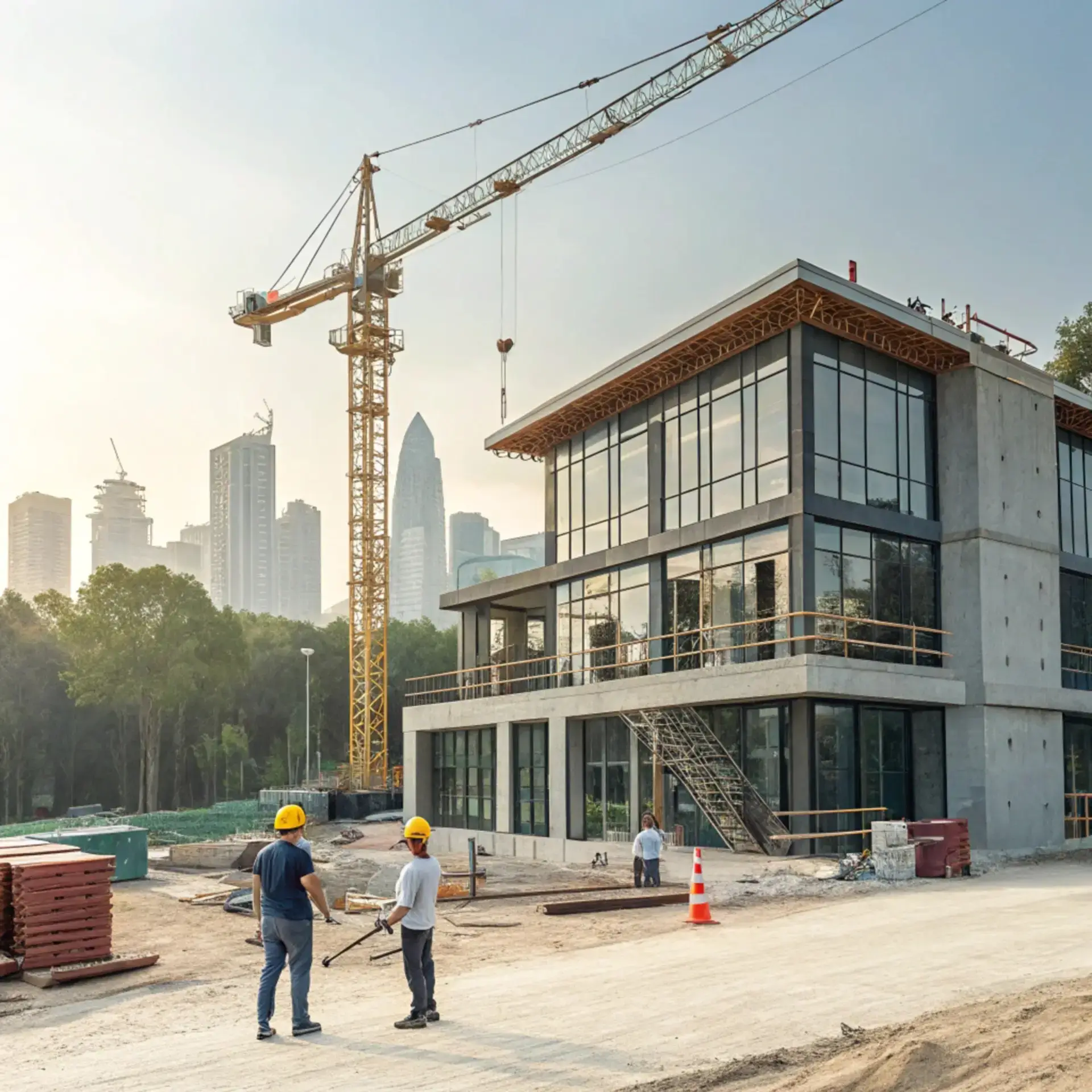
A south city 2 builder floor is one complete home on one floor of a low-rise building, in a colony at Delhi’s southern edge next to Vasant Kunj. Almost every building there went up plot by plot rather than as part of one developer’s project. That single fact explains most of what follows: no two buildings are alike, the streets are not uniform, and the paperwork decides more about your resale than the finish does.
Where South City 2 Actually Is
South City 2 adjoins South City 1 on the southern edge of Delhi, close to Vasant Kunj. The two colonies share a road pattern, a plot-first approach to building, and the same mixture of original houses and newer rebuilt floors. If you already know South City 1, the simplest way to think about South City 2 is that it is the same kind of market one colony over: the same low-rise scale, the same plot-driven supply, different streets and different distances.
Because the colony grew one plot at a time, it rewards walking. Ten minutes on foot can take you past a 1970s house still occupied by the family that built it, a building finished last year with a stilt and a lift, and a plot under redevelopment. Compare those three on one visit and you will understand the local price ladder better than any listing page explains it.
South City 2 Builder Floor vs South City 1
Most buyers start in South City 1 because it is better known, then move across when they find the supply thin or the quotes steep. The comparison is worth making deliberately, because the two colonies are close enough to be substitutes and different enough to produce very different deals.
- Plot sizes. Both colonies were laid out on plots of different sizes, and the floor area you get follows the plot. A floor on a larger plot carries more land under it, and that land is the largest single part of the price.
- Street width and access. A wider road supports a bigger building and easier parking. Walk the approach road, not just the street outside the gate.
- Age of the stock. One colony may have a larger share of recent rebuilds and the other more original houses. Recent construction is not automatically better, but it changes what you should inspect.
- Distance to the retail belt. Proximity to Vasant Kunj’s shops and schools is convenient, but the streets closest to commercial activity also carry more traffic and more rented flats.
- Price per square foot. Do not compare headline prices. Compare registered sale deeds for similar floors on similar plots, then adjust for floor level and finish.
The South City II Confusion: Delhi and Gurgaon
Search for South City 2 and a large share of the results will be about Unitech South City II, a township off Sohna Road in Sector 49, Gurgaon. That is a completely different market. It is a single developer’s township inside Haryana, with its own internal roads, services and maintenance structure. Delhi’s South City 2 is a plotted colony where each building has its own owner, its own approval history and its own paperwork.
The mix-up costs buyers real time. If a quote looks far below the Delhi colony, check the address first. A Delhi postal address carries a pin code beginning with 110; a Gurgaon address does not. The two also follow different circle rates, stamp duty and registration offices, so comparing them is never like for like.
What a South City 2 Builder Floor Usually Contains
On a rebuilt plot, the pattern is fairly consistent. The details vary with the builder and the year of construction, so treat this as a checklist of what to expect rather than a specification you can rely on.
- A stilt level used for covered parking, with the homes above it.
- One home per floor, or occasionally two smaller homes on a floor.
- Two or three bedrooms with attached bathrooms in the newer buildings.
- A kitchen with an exhaust shaft to open air, not a recirculating chimney.
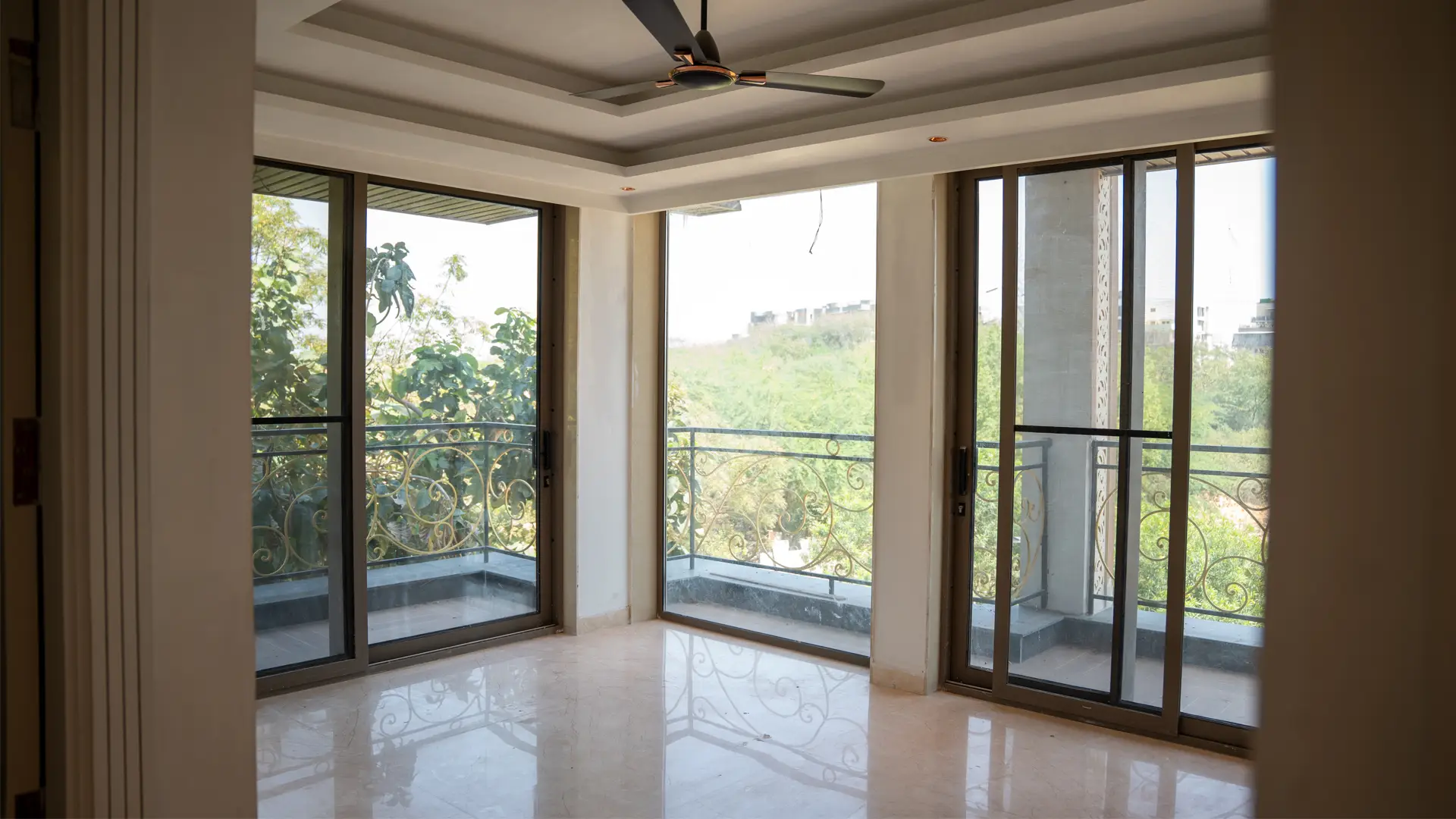
- A balcony off the living room, and in larger units a second balcony off a bedroom.
- A lift in buildings completed in the last decade or so; many older buildings have none.
- Terrace access for the top floor, with roof rights only if the deed grants them.
Floor areas follow the plot. A floor on a smaller plot may sit in the region of 1,200 to 1,500 square feet, while larger plots produce floors above 2,000 square feet. Those ranges are for orientation only. Measure the unit, read the sanctioned plan, and treat the carpet area as the number you are actually paying for.
What Sets the Price in This Colony
Six variables explain most of the gap between two quotes in the same colony. When a seller quotes an area rate, ask which of them the number already assumes.
- Plot size and land share. The land under the building is the largest component of value, and your undivided share of that land is what you actually own in perpetuity.
- Floor level. The first floor usually carries the strongest price because it avoids both the climb and the terrace heat. The top floor can be the cheapest unit in the building unless terrace rights and a good finish compensate.
- Finish and age. A building completed last year with a lift, new bathrooms and a modular kitchen is not comparable to a 2009 building with original fittings, even on the same plot.
- Position. A corner plot or a wider road supports a better building and easier parking, and buyers pay for both.
- Parking. Two covered spaces are worth more than one, and an open car squeezed into the setback is worth very little.
- Paperwork. A clean, freehold chain with a sanctioned plan and a completion certificate supports a mortgage and a fast resale. A file held together by agreements to sell and a power of attorney does not, and the discount you negotiate may not cover the difficulty you inherit.
To test whether a quote is fair, use three sources rather than one. First, look up the notified circle rate for the locality, published each year by the Delhi Revenue Department and summarised in the guide to the Delhi circle rate for 2026. Second, ask the sub-registrar’s office or a lawyer to pull two or three registered sale deeds for similar floors in the same block. Third, compare three live asking prices for comparable units and discount them for negotiation room. A single per-square-foot figure quoted for the whole colony is close to useless.
What to Check Inside Each Building
A finished floor can still carry expensive problems. These checks come up most often in a colony of rebuilt plots.
- Seepage. Look at the ceiling under the terrace, around bathroom walls and at the base of every external wall. Fresh paint over a damp patch is a warning, not a repair.
- The staircase. Width, headroom and a handrail matter for daily use and for moving furniture. A narrow single flight shared by four homes becomes a real constraint.
- The lift, where there is one. Ask for the maintenance contract, the last inspection and the power backup arrangement. A lift that stops in a power cut is a daily problem for older residents.
- Water. Find the tanks, check their condition and ask how the supply is shared. Pressure on the top floor is where weak plumbing shows first.
- Electrical load. Ask for the sanctioned load on the meter and whether each floor has its own connection.
- Parking. Count the cars the building actually holds when everyone is home, not the cars in the brochure.
- The sanctioned plan against what is built. Deviations in setbacks, an extra floor or a covered area where a court should be are visible once you have the drawing in hand. The guide to checking a sanctioned building plan in Delhi NCR explains how to read one.
The Documents That Decide Whether You Can Resell
The chain of title is the spine of the file. Every transfer in the property’s history should be traceable, and each link should match the next in name, area and description. Ask for the sanctioned plan, the completion certificate where one was issued, property tax receipts, the mutation record, and the seller’s identity and address proof. On leasehold land, read the lease or conversion terms before you negotiate, because a leasehold floor sells to fewer buyers and finances differently.
Terrace and roof rights deserve their own line in the agreement. Ownership of the terrace is not implied by owning the top floor, and buyers who assume otherwise end up in disputes with the floor below. The explanation of terrace rights on builder floors in South Delhi covers what the deed has to say. For the full document set, work through the seven legal documents to verify before buying.
Costs Beyond the Quoted Price
Budget for stamp duty and registration on the higher of the circle rate value or the transaction value, plus brokerage where a broker is involved, conversion charges on leasehold property, and the cost of transferring electricity, water and gas connections. Add the maintenance deposit and the first year of common expenses. The stamp duty and registration charges for Delhi in 2026 sets out the current rates, and the registry process in Delhi explains the sequence at the sub-registrar’s office. These figures change with government notification, so confirm the current rate before you sign rather than relying on a number quoted to you verbally.
A Walkthrough You Can Repeat
- Call ahead and ask for the sanctioned plan, the chain of title and the property tax receipts before you visit. A seller who cannot produce them has told you something useful.
- Walk the street at two different times of day. Traffic, parked cars and noise look different at 9 in the morning and 8 at night.
- Inspect the floor with a torch, in daylight, and look up at ceilings and down at skirting boards.
- Match the drawing to the building on site, floor by floor.
- Verify the seller’s identity and every name in the chain against the deeds.
- Price the transaction properly, using the circle rate, two registered deeds and three asking prices, and put every defect you found into a written list before you discuss the number.
None of this is exotic. It is what separates a floor you can resell quickly from one whose buyer cannot raise a loan against it. If you would rather run these checks on a shortlist in person, Rana Infra works in this part of South Delhi every week, and the builder floors in Vasant Kunj page shows how the neighbouring market is laid out.