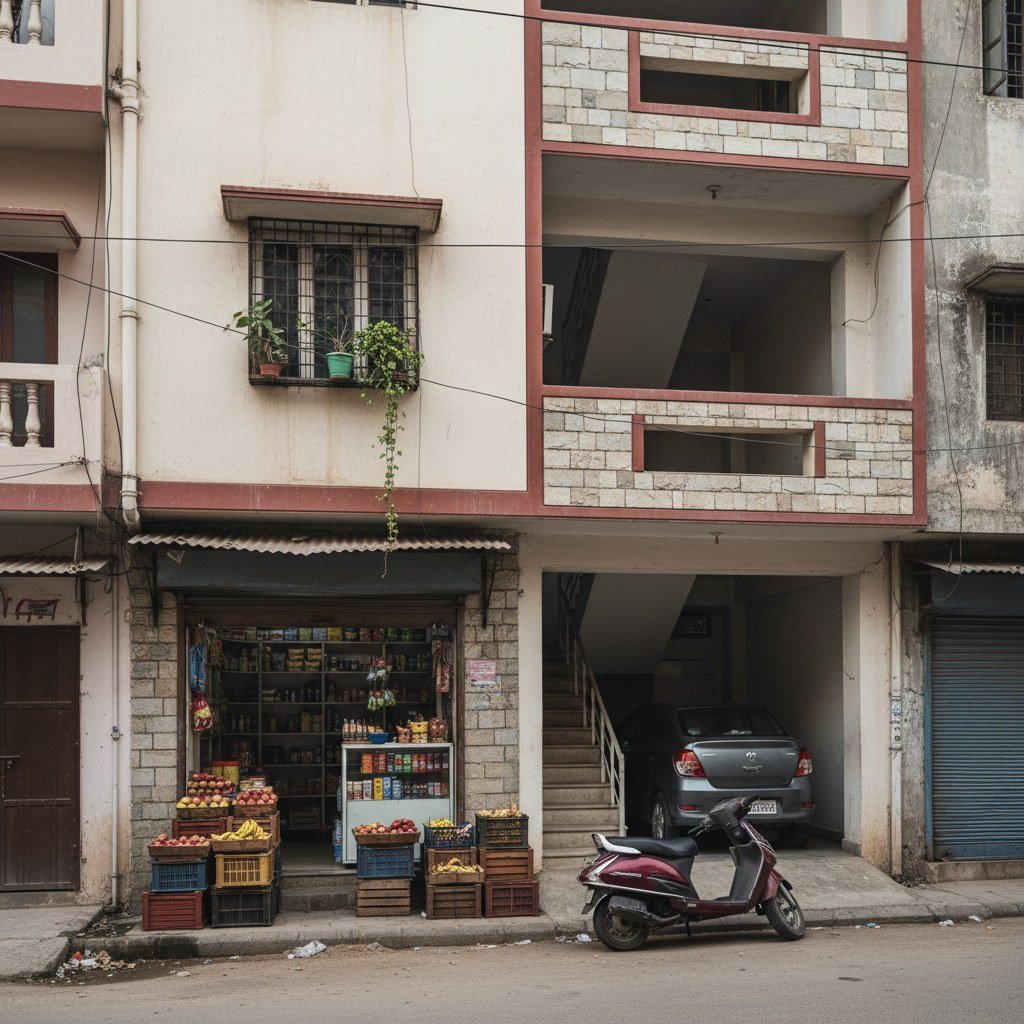

MCD unauthorized construction is recorded against the building, not against the floor you are buying. That one fact is why a floor buyer cannot treat the municipal record as the seller’s problem or the builder’s problem. The record sits on the plot, and the plot is shared by every floor in it.
Most floor buildings in South Delhi have never been booked. Some were booked and later unbooked after the deviation was removed. A few carry a file that has stayed open for years. Telling those apart takes an afternoon of checking and one document: the sanctioned plan.
What booked means in MCD records
When the Municipal Corporation of Delhi finds construction that departs from the sanctioned plan, or construction with no plan at all, it records the property in its booking register with a file number and issues a notice. The stages that can follow are sealing and demolition. The booking entry stays until the department records an unbooking, which usually follows rectification, or a regularisation that the bye-laws allow for that kind of deviation.
A booking is a record, not a court order. It does not by itself end your ownership or empty the building. What it does is attach a known deviation, an open file and a possible deadline to a building in which you would own one floor and a share of the plot under it.
Why the floor buyer carries the risk
There is one plot, one sanctioned plan and one land share. The staircase, the water tank, the parking and the terrace are shared by every owner. A booking is against that plot, so buying the second floor instead of the ground floor does not remove it, and it does not reduce it.
Banks read the building rather than the floor. A lender that finds an open booking treats the whole property as a problem, whatever the condition of the floor you are buying. And if demolition ever comes, it takes the unauthorised portion, which may be the room over the stilt, the floor above yours, or the staircase enclosure that everyone uses.
What gets booked in a floor building
Five deviations account for most of the bookings in low-rise colonies:
- A floor built beyond the number the plan sanctions.
- The stilt enclosed into a room, so the sanctioned parking disappears.
- A basement used as living space rather than for parking or storage, which our guide to basement rules in Delhi deals with separately.
- A balcony or projection enclosed to add floor area.
- Ground coverage or a setback exceeded at the front, side or rear.
In practice, the deviations that change the number of floors or the number of dwelling units, or that remove the mandatory open area and parking, are the ones treated as rectification matters rather than fee matters. That distinction matters more than the size of the change. A small alteration that touches the sanctioned floor count is a different problem from a larger one that stays inside the envelope.
How to check MCD unauthorized construction
| Where to look | What it shows | What it cannot |
|---|---|---|
| MCD’s unauthorised property list on mcdonline.nic.in | Bookings entered by property number or colony, with file details where they are published | Many ward records stay offline; a blank result is not a clearance |
| The ward office building department | The physical file, the notices issued and the current status | Needs a visit, and the file is indexed by the property as described, not by the owner |
| The sub-registrar office for the area | The registration record for the plot, and the lists the corporation sends there | It records what was registered, not what was built |
| The building itself | A notice pasted on the wall, sealed portions, a room where the plan shows an open stilt | Repairs and paint hide the evidence |
| The sanctioned plan | What the building is allowed to be, floor by floor | Nothing, unless it is read against what stands |
Start with the plan, not the list
The list tells you whether someone has already been caught. The plan tells you whether the building can be caught. Those are different questions, and only the second one is about the property you are standing in.
A building can be wholly unauthorised and not yet booked, because the corporation acts on complaints and inspections rather than on a survey of every roof. It can also be booked for something minor while being otherwise compliant. Put the approved drawing beside the building and compare the floor count, the number of units on each floor, the stilt, the basement, the setbacks at ground level and any room on the terrace. Our guide to checking the sanctioned plan before buying takes that comparison sheet by sheet.
Reading an entry in the list
An entry is usually a row with four things worth reading: the booking or file number, the date, the property as described, and the deviation recorded. The file number is what you quote at the ward office. The date tells you whether the matter has been sitting for months or years. The description is where most checks fail, because it follows the address as it was written when the booking was made, and a plot number can be split or renamed since then.
The deviation decides the risk. An entry for a projection or an enclosed balcony is a different proposition from an entry for a floor the plan does not sanction. If the row describes an extra floor or an extra unit, go back to the drawing and count, because that is the kind of entry a price cannot fix.
If the list shows a booking
Ask for the file number, the date, the provision under which it was booked and the current status. An unbooking order is a document with a number on it, not a sentence in a conversation. Ask who pays any penalty, and whether the registration will be allowed to proceed.
Then judge the deviation, not the paperwork. If the file concerns an extra floor, an extra unit or a stilt that has been built in, the file is not the kind that closes with a fee. That is the point at which a buyer should be willing to walk, even if the floor itself is the best one you have seen.
If the list shows nothing
It means the property was not on the published list on the day you looked. Ward files are incomplete, older colonies predate the digital record, and entries are indexed by the address as it was written at the time of booking, which may not match the number on the gate today.
It also says nothing about plan compliance. Plenty of unbooked buildings deviate, and the deviation is still yours to price once you own a floor in them.
What to ask the seller to hand over
- The sanctioned plan, with its approval number.
- Completion or occupancy papers, where the colony practice produced them.
- The latest property tax receipt, assessed on the floor as built.
- The MCD file number, if a notice was ever received.
- The unbooking order, if a booking was ever removed.
- A clause in the agreement that says who carries a booking that predates the sale.
If you already own the floor and a notice arrives
Read what the notice actually alleges: the file number, the provision and the specific construction described. The reply is a technical one, built from the sanctioned plan and from photographs of what stands. Notices carry their own deadlines, and an unanswered notice moves to the next stage.
This is also the reason to keep the drawings and the tax receipts from the day you bought. A file that opens ten years later is answered with paper from ten years ago.
What no portal can tell you
No online list will tell you whether four floors stand where three were sanctioned, whether the stilt is a garage or a bedroom, or whether the room on the terrace is a store or a dwelling. Those are the checks that decide what a floor is worth, and they are done on site, with the drawing in hand.
Ask any seller, including us, for the drawings behind the floor before a token is paid, and ask which parts of the building they cover. If you would like to compare what a plan allows with what is standing, look at the floors we build in South Delhi, or ask us for the price and the floors that are open and we will send both in writing.