A builder floor in South Patel Nagar is a very different purchase from the same words in South Delhi. The plots are smaller, the buildings are older, the streets were laid out for a different era of traffic, and a fair share of the ground floors have drifted into commercial use. None of that makes the locality a bad buy. It does mean the checks that matter here are not the ones a new-build brochure invites you to make.

Where South Patel Nagar Sits
Patel Nagar is a central Delhi colony, laid out in the years after Partition and built up over the following decades. The Blue Line runs through it with three stations in a row: Shadipur, Patel Nagar and Rajendra Place. South Patel Nagar is the pocket closest to the Patel Nagar metro station, which puts a large part of the locality within a short walk of the platform.
That connectivity is the area’s main draw, and it is also the source of its problems. A colony designed around a fraction of today’s car ownership now carries far more vehicles than its lanes were built for. Parking is contested, service lanes are narrow, and the walk from the metro is noisier and more commercial than the address suggests.
What a Builder Floor in South Patel Nagar Really Is
Most of the housing here was not built as builder floors. It was built as family houses on small plots, and later divided or rebuilt. That history produces three distinct kinds of unit, and they are priced and financed differently.
- A converted floor. An original house split into floors, often with shared entries, an older staircase and the original plumbing. The cheapest per square foot and the hardest to finance.
- A rebuilt floor. A small plot demolished and rebuilt with a stilt and two or three floors. Newer services and finishes, but check the sanction carefully, because the plot is tight and setbacks are easy to breach.
- A full house on a small plot. Not technically a builder floor, but often advertised as one. You buy the whole structure and the land under it, which changes both the price and the paperwork.
Ask the seller which of the three you are being shown. The answer tells you what to inspect, what a bank will lend against, and how the property will behave at resale.
Start With the Plot, Not the Floor
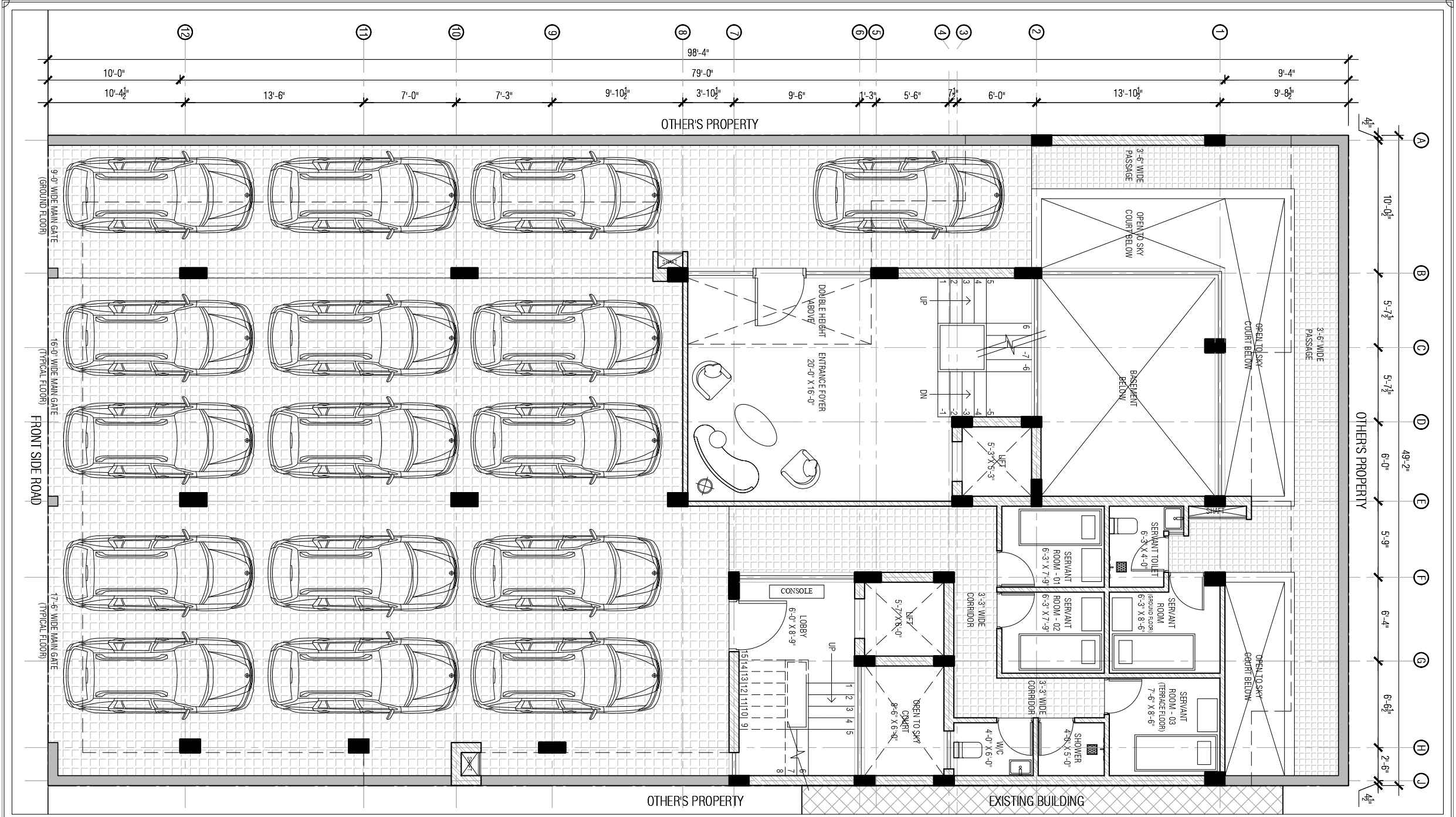
On a small plot, every decision the builder made is visible in the plan. A 100 to 200 square yard plot cannot give you generous setbacks, a wide staircase, two-car parking and three large bedrooms at the same time. Something is always traded away, and your job is to find out what.
Measure the setbacks against the sanctioned drawing. Check whether the stilt is a sanctioned stilt or a covered ground floor being used for parking. Look at where the staircase sits relative to the neighbouring plot, and whether any window of the unit faces a wall less than a metre away. These are the details that decide how the floor feels in daily use, and none of them appear in a listing.
Plot size also drives your undivided share of the land. On a small plot shared among three or four floors, that share is modest in absolute terms, and it is worth understanding before you accept a price that assumes otherwise.
The Approvals That Matter on an Older Plot
Three papers do most of the work. First, the sanctioned building plan, which shows what the authorities permitted on that plot. Second, the completion certificate, where one was issued, which confirms the building was finished in line with the sanction. Third, the property tax record and the mutation entry, which show who the municipality treats as the owner.
On rebuilt small plots, deviations are common: a floor added later, a covered area where a balcony was sanctioned, a stilt enclosed after the fact. Some deviations are minor and some make the property difficult to mortgage. Read the drawing against the building before you fall in love with the interiors, and use the guide to checking a sanctioned building plan in Delhi NCR to read it properly.
Mixed Use, Guest Houses and What They Change
Parts of Patel Nagar carry commercial use on the main roads, and the side streets hold a large number of guest houses, paying-guest rooms and small offices. This is a real feature of the locality, not a rumour, and it changes daily life in ways buyers underestimate.
- Traffic and parking pressure are concentrated in the evening, when guests arrive.
- Water and power load on a shared building rises with the number of occupants, and a floor let out on short stays adds to it.
- Noise carries differently in narrow lanes than on an open road.
- Resale to a family buyer is slower on a street dominated by commercial use, whatever the unit itself is like.
Walk the lane on a weekday evening and again on a Sunday morning. If the two feel like different places, you have found the thing that will decide whether you enjoy living there.
The Building: What Older Construction Hides
Buildings from the 1960s to the 1980s were not designed for the electrical load, water pressure or air-conditioning a modern household assumes. When such a building is divided into floors, the services are often extended rather than replaced. That is where the expensive surprises sit.
- Seepage. Check ceilings below terraces and bathrooms, and the base of every external wall. Fresh paint over damp is the most common cover-up in this market.
- Plumbing. Ask when the risers were last replaced, and whether each floor has its own shut-off valve.
- Electrical load. Ask for the sanctioned load and how many meters serve the building. A single meter shared by four floors is a problem you inherit.
- The staircase. Width, headroom and handrail. On a small plot this is often the tightest part of the house.
- The roof. If you are buying the top floor, inspect the terrace slab and the waterproofing history, not just the view.
Parking, Stilt and the Street
Count the cars the building can actually hold when every family is home. A stilt designed for one car does not become two because the listing says so. Then check whether the car can leave without moving another, and whether the gate swings into a lane where a school bus or a delivery van passes twice a day.
On-street parking in this belt is not a right you can rely on. If the unit has no covered space, price that in, because a floor without parking in a dense colony is harder to sell than the same floor with it.
Roof Rights and the Deed
Owning the top floor does not automatically give you the terrace. Roof and terrace rights pass only if the sale deed or a separate agreement grants them, and in a divided house the ground-floor owner often retains them. Read the clause rather than accepting a verbal assurance, and check whether the terrace has a structure on it that belongs to someone else.
The rest of the file is the ordinary chain of title: every transfer traceable, every name matching, the area described consistently across documents. The seven legal documents to verify before buying a builder floor lists what to collect, and it applies here as much as it does in South Delhi.
Money: Circle Rate, Stamp Duty and Loan Value
Stamp duty is charged on the higher of the circle rate value or the transaction value, so the circle rate for the specific colony and colony category sets the floor on your tax bill. Rates are notified by the Delhi Revenue Department and revised periodically. Check the current notification for Patel Nagar before you compute anything, and treat the summary in the Delhi circle rate 2026 guide as a starting point rather than the final word.
Then add the registration charge, the brokerage where one applies, and the cost of transferring electricity, water and gas connections into your name. The stamp duty and registration charges in Delhi sets out the current rates, and the registry process in Delhi explains the appointment, witnesses and documents at the sub-registrar’s office. For a fuller picture of where the money goes beyond the sticker price, the builder floor cost breakup is useful.
Loan value is the other half of the arithmetic. Banks lend against the lower of the registered value and their own valuation, and they are stricter about older buildings, unclear sanctions and converted floors. A unit advertised at one price can leave you funding a larger share from your own pocket than you planned. Ask a lender for a valuation before you commit, not after.
When to Walk Away
- The seller cannot show the sanctioned plan, and the building clearly does not match a standard layout.
- The chain of title has a gap, or the seller’s name does not match the last registered deed.
- The unit is a converted floor with a shared meter and no separate water connection, and the price does not reflect it.
- The terrace or roof rights belong to another owner and you were told otherwise.
- The building has active seepage that has been painted over more than once.
- Parking exists only on paper.
None of these are unusual in an older colony, and most can be priced rather than rejected. What you cannot do is discover them after registration. If you are weighing this locality against a gated apartment, the comparison of a builder floor and an apartment in Delhi sets out the trade-offs in maintenance, control and resale. If you would like a second pair of eyes on a specific floor here, Rana Infra can walk it with you.