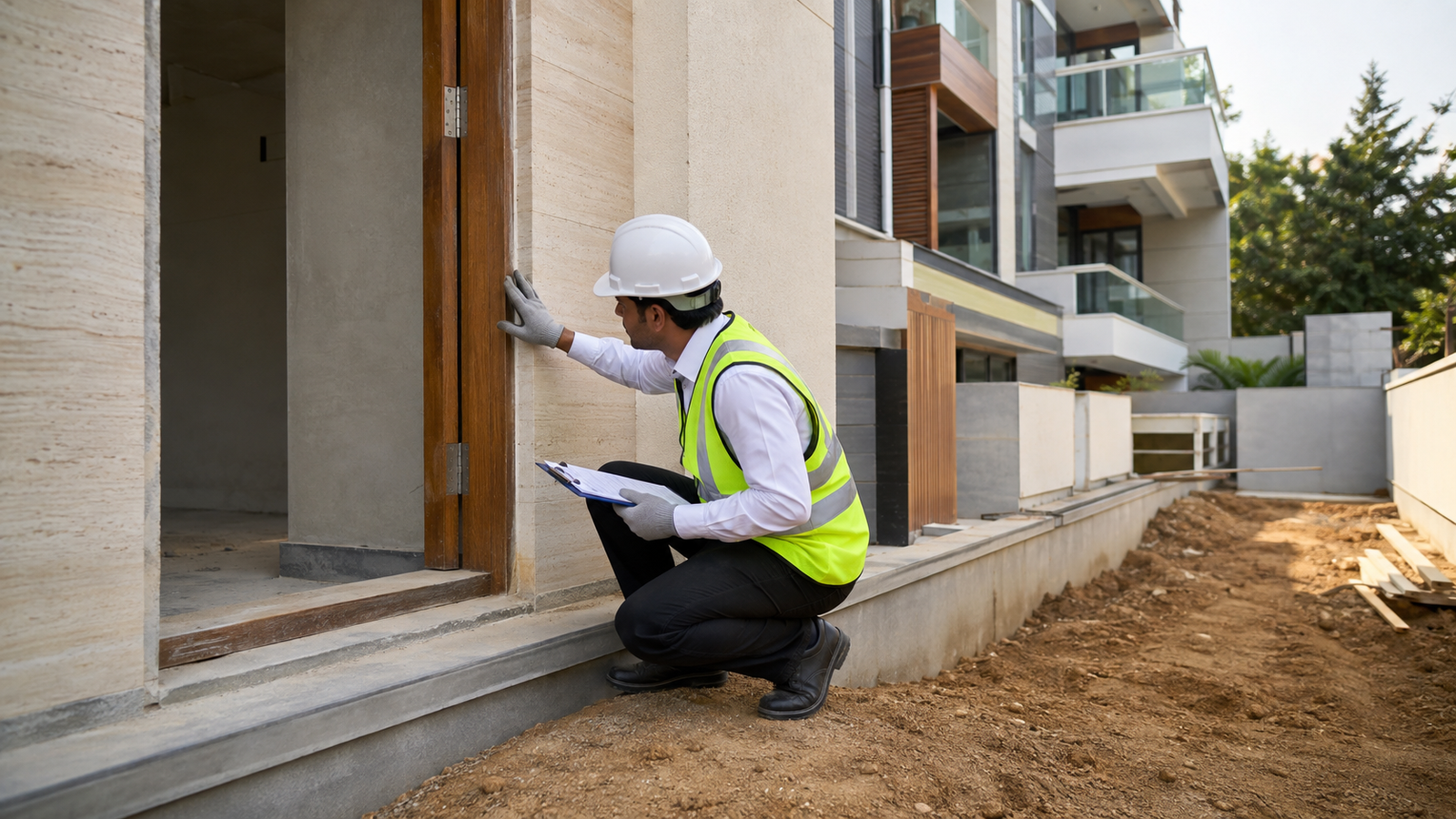

A gift deed in Delhi is how a builder floor moves from a parent to a child, or from a husband to a wife, without a sale and without money changing hands. It is also the document that most often goes wrong, because a floor is not one asset. It is a built structure sitting on a share of land, and a gift that transfers the structure but not the share leaves the new owner with a building he cannot mortgage or sell cleanly.
This guide covers what the deed must say, what the sub-registrar actually checks, what happens after registration, and the situations where a gift is the wrong instrument altogether.
What a gift deed in Delhi has to transfer
Every builder floor is sold as two things bundled together: the constructed portion on a named floor, and an undivided share of the plot underneath. Your own sale deed will have a clause describing that share, usually as a fraction of the whole plot. The gift deed must repeat it in the same terms.
If it does not, the donee holds a structure with no recorded land interest. Banks treat that as a defective title when the floor is offered as security, and the next buyer’s lawyer will raise it in the first search. Fixing it later means a second registered document, which is more expensive than drafting the first one properly.
Describe the property the way a sub-registrar reads it: building name, floor, built area as per the sanctioned plan, the plot number as it appears in your sale deed, and the land share. Attach the sanctioned plan reference if you have it.
The five things the deed must have
The Transfer of Property Act is short on ceremony and strict on form. A gift of immovable property is valid only if it clears these five points.
- It is made by a registered instrument, signed by the donor.
- It is attested by at least two witnesses.
- The donee accepts it during the donor’s lifetime. A gift that has not been accepted is not a gift.
- No consideration passes. A gift with a payment attached is a sale and is taxed and stamped as one.
- Both parties and both witnesses appear before the sub-registrar, with biometric verification.
The acceptance point is where family gifts fail. A deed that says the property shall belong to my son after my lifetime is not a gift at all. It is a will in the shape of a gift deed, and courts have read it that way. If you want to keep the floor until you die, write a will. If you want to give it now, say so now, and have the donee sign acceptance.
What the sub-registrar checks in Delhi
Delhi does not apply a separate, cheaper schedule for gifts between relatives. The gift is stamped at the same rate as a sale of the same property, and the rate turns on the donee’s gender. That surprises families who have read that blood relations get a concession. Some websites repeat that claim; the Delhi Revenue Department’s own registration page does not offer one.
Three practical points follow.
- The property has to be valued by an approved valuer before the deed is presented. The valuation is the base for the duty, not the figure the family agrees on among themselves.
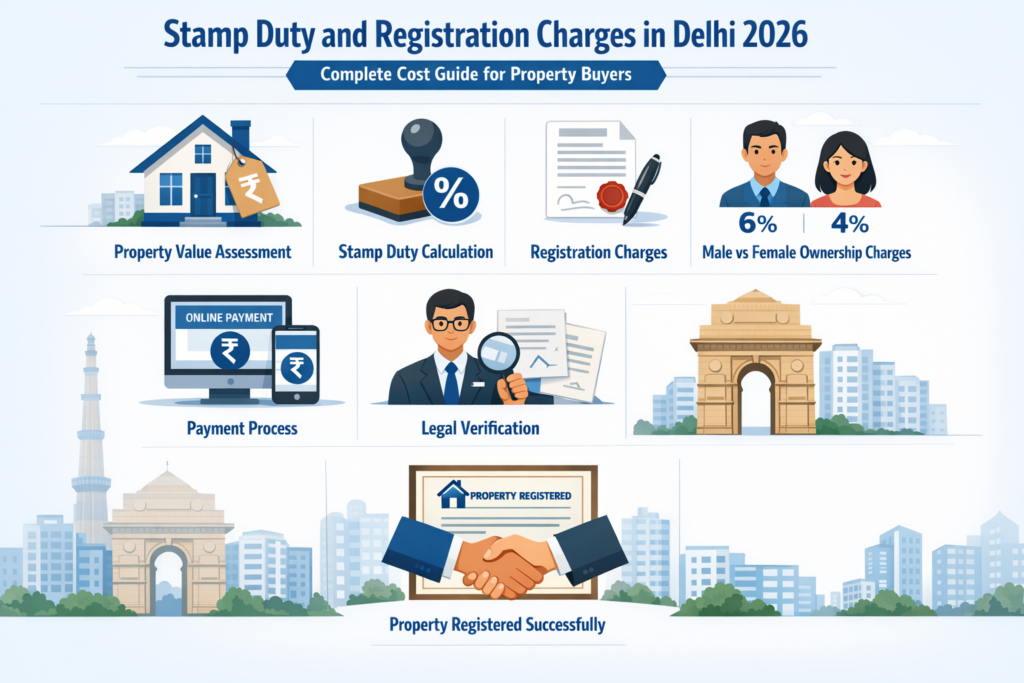
- Stamp duty is paid electronically through e-stamping, and the registration fee is paid separately at the sub-registrar’s office. Our guide to stamp duty and registration charges in Delhi sets out the current rates, the transfer duty that most calculators leave out, and how the gender split works.
- Appointments are booked through the DORIS portal. Walk-ins are accepted only where slots are free, and a deed presented without the valuation and the e-stamp is sent back.
The current Delhi procedure and the documents required are listed on the Delhi Revenue Department registration page.
Registration gives title. Mutation gives records.
Title passes to the donee the moment the gift deed is registered. Nothing else is needed for ownership.
Mutation is a different act. It changes the name in the municipal and revenue records, which is what makes the new owner visible for property tax, water and electricity connections. Buyers confuse the two and assume a registered deed is enough. It is enough for title, and not enough for a clean file. Our note on mutation after registry in Delhi covers the sequence, because a gifted floor that is never mutated comes back as a mismatch during the next sale.
When a gift deed in Delhi can be cancelled
Almost never, once it is registered and accepted. Section 126 of the Transfer of Property Act allows revocation in two situations: where the deed itself reserves a right to revoke on a specified event, and where the donor and donee agree to revoke.
The Supreme Court held in 2025 that a donee’s failure to look after the donor is not, by itself, a ground to revoke. If the donor wanted maintenance to be a condition, it had to be written into the deed as a condition. A promise made at the family dinner table does not travel with the document.
A cancellation deed signed by the donor alone does not undo a gift. The sub-registrar has no power to cancel a registered transfer on one party’s request, and a deed of cancellation registered without the donee’s consent is treated as void. The remedy is a civil suit, which is slow and uncertain.
If the intention is to give the floor eventually but keep control now, a will does that job. So does a gift that reserves a life interest, where the donor keeps the right to live in the floor for life and the donee takes it afterwards. That reservation must be drafted into the deed.
Gift, will, relinquishment or sale
| Route | What it does | Fits when | Main constraint |
|---|---|---|---|
| Gift deed | Transfers ownership now, no consideration | You want the floor in the donee’s name in your lifetime | Duty is payable at sale rates; revocation is nearly impossible |
| Will | Transfers on death, revocable until then | You want to keep ownership and control | Probate and disputes can delay the transfer by years |
| Relinquishment deed | One co-owner releases his share to another | The floor is already jointly held and the shares need sorting | Only works between existing co-owners |
| Sale deed | Transfers for consideration | The donee is paying, or a lender needs a clean purchase trail | Full duty plus capital gains in the seller’s hands |
Families usually need the first three, in that order of frequency. A registered gift during life avoids the probate queue entirely, which is why parents with one clear intended recipient often prefer it despite the duty.
Five builder-floor situations where gifts go wrong
- The floor without the land share. Covered above, and the most common defect we see in title searches.
- Joint owners, one signature. If a floor is held by a husband and wife, both must join as donors. One spouse cannot gift the other’s half, and a deed signed by one owner is void as to the other’s share. A jointly held floor needs the shares settled before any gift.
- The mortgaged floor. A floor with a live home loan cannot be gifted without the lender. Get the loan closed or the bank’s no-objection in writing before the deed is drafted.
- A minor as donee. A minor can receive, but cannot contract. The natural guardian accepts on the minor’s behalf, and the deed should say so. The floor stays the minor’s property and cannot be sold to fund anything else.
- A relative the tax law does not recognise. Gifts from a spouse, parent, sibling, lineal ancestor or descendant, and their spouses, are exempt from income tax in the recipient’s hands. A gift to a brother’s wife, a nephew or a cousin is not in that list, and the stamp duty value is taxed as income once it crosses the statutory threshold.
Tax after the gift
For the donee, the income tax question turns on the relationship, not the value. Gifts from the relatives listed above carry no cap. Everything else is taxable at the recipient’s slab once the value crosses the threshold in Section 56(2)(x).
For capital gains later, the donee steps into the donor’s shoes. The cost of acquisition is what the donor originally paid, and the holding period includes the donor’s years of ownership. A floor bought in 2011 and gifted in 2026 is still a long-term asset in 2026, and the gain is computed on the 2011 cost. That is usually favourable, and it is worth checking before a sale rather than after.
What to carry to the appointment
- Original gift deed on e-stamp paper, signed by donor and donee, attested by two witnesses
- The donor’s original sale deed for the floor, showing the land share
- Approved-valuer report
- PAN and address proof for donor, donee and both witnesses
- Latest property tax receipt
- Sanctioned plan copy, where available
- The e-stamp certificate and the registration fee payment record
Two witnesses must attend in person, with their own identity documents. A deed presented with witnesses who are not present is adjourned, and the appointment has to be taken again.
If you are gifting or buying a floor in Vasant Kunj, Vasant Enclave or Nangal Dewat and want the title chain checked before you sign anything, talk to us and we will read the documents with you.